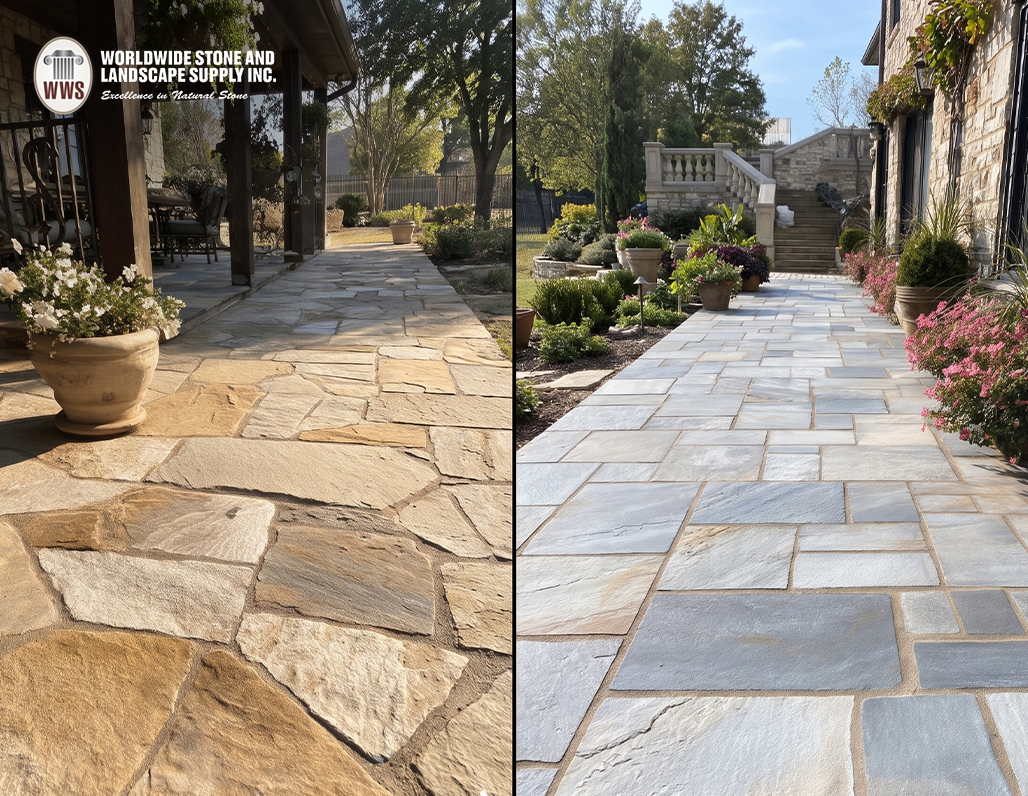
Flagstone is natural stone split into irregular, free-form pieces, while stone pavers are cut into regular shapes with straight edges and an even thickness. Both can be the same stone. The difference is how the stone is cut, and that changes the look, the installation and how the patio feels to live with.
If you’ve been scrolling through patio photos, you’ve probably noticed two very different styles. One looks like a puzzle of organic shapes, the other like a clean, tiled floor. Neither is “better” across the board. Each suits a different home, budget and installer.
This guide compares flagstone and pavers side by side, explains where each works best and covers what Ontario winters mean for both.
What Is Flagstone?
Flagstone is natural stone that has been split along its natural layers into flat slabs. The edges are left irregular, so no two pieces are the same shape. Sandstone, limestone and slate are common flagstone types because they split cleanly into flat layers.
Key features of flagstone:
- Irregular, organic shapes
- Natural cleft surface with gentle texture
- Thickness that varies from piece to piece
- Wider, uneven joints between stones
- A relaxed, rustic or cottage feel
What Are Natural Stone Pavers?
Pavers are the same kinds of stone cut into squares and rectangles. Cutting gives them straight edges and, often, a calibrated (even) thickness. You can lay them in patterns such as a running bond, a grid or a random mix of sizes.
Key features of stone pavers:
- Straight, sawn or hand-chiselled edges
- Consistent sizes that fit together in patterns
- More even thickness, especially when calibrated
- Tight, uniform joints
- A tailored, modern or classic look
Our natural stone pavers in Ontario come in both formats, so you can compare the two styles in the same stone and colour.
Flagstone vs Pavers: Side-by-Side Comparison
Factor | Flagstone | Stone pavers |
|---|---|---|
Shape | Irregular, free-form | Squares and rectangles |
Look | Natural, rustic, organic | Clean, structured, modern or classic |
Joints | Wider and uneven | Narrow and uniform |
Thickness | Varies piece to piece | More consistent, often calibrated |
Installation | Slower; pieces fitted like a puzzle | Faster; pieces follow a pattern |
Cutting waste | Some, from trimming to fit | Lower with planned layouts |
Surface | Natural cleft | Natural cleft, flamed or other finishes |
Best for | Garden paths, cottage patios, informal spaces | Patios, pool decks, entrances, modern homes |
Furniture | Can rock on uneven joints | Sits flat and stable |
The Look: Rustic Charm or Clean Lines?
Start with your house. Flagstone suits stone or brick homes, cottages, gardens with lots of planting and anywhere you want the patio to feel like it grew there. Its irregular joints also work well with low groundcover plants or moss in shady spots.
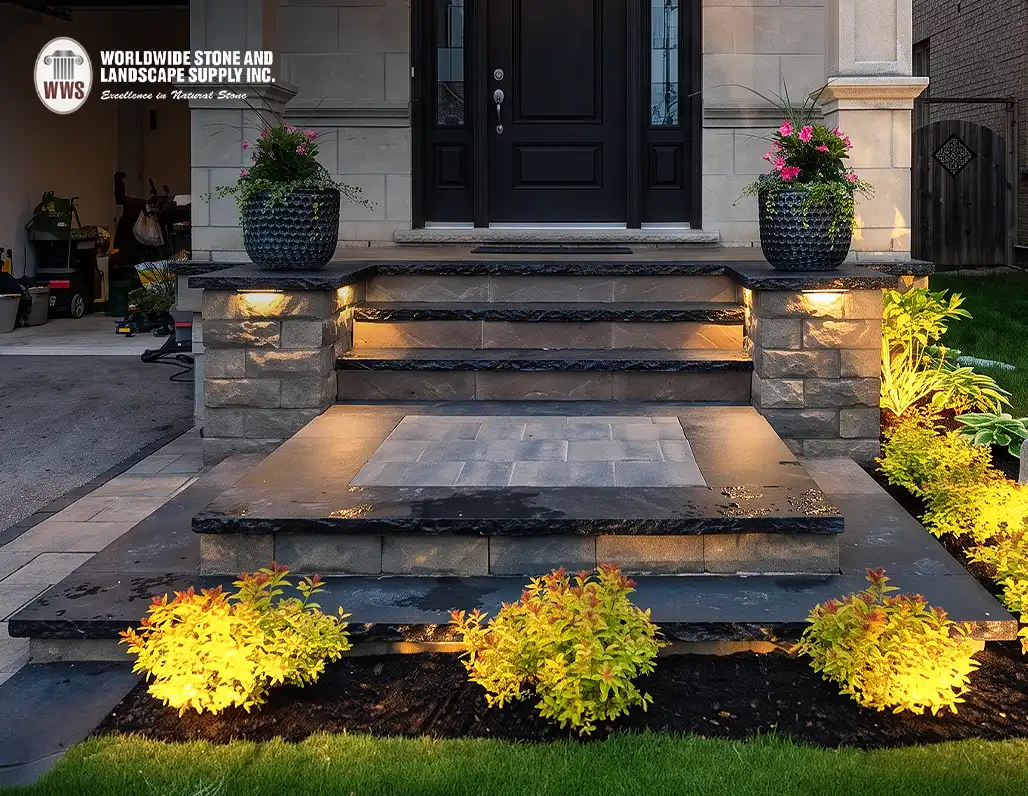
Pavers suit modern homes, formal entrances and patios that connect directly to an indoor floor. Large rectangles in a simple pattern make a small yard feel bigger and calmer.
You don’t have to pick only one. A common Ontario combination is a paver patio near the house with a flagstone path leading out into the garden.
Where Each Style Works Best Around Your Home
Most properties have several outdoor areas, and each one asks something different of the stone. Use this table as a starting point when you plan the whole yard rather than one patio at a time.
Area | Better fit | Why |
|---|---|---|
Back patio with dining set | Pavers | Flat, stable surface for chairs and tables |
Pool deck | Pavers | Even joints underfoot and easier to clean |
Front walkway | Pavers or flagstone | Pavers for a formal entrance; flagstone for a cottage look |
Garden path | Flagstone | Follows curves without heavy cutting |
Stepping stones in lawn | Flagstone | Natural shapes blend into grass |
Fire pit area | Either | Choose a dense stone and keep joints tight near seating |
Side yard | Flagstone with gravel joints | Drains well and costs less to lay over a long, narrow run |
A useful rule: the closer an area is to the house and the more furniture it holds, the more pavers make sense. The further out into the garden you go, the more natural flagstone tends to look.
Think about maintenance too. Wide flagstone joints filled with gravel or planting need occasional topping up and weeding. Tight paver joints filled with polymeric sand need little attention once cured, though they should be checked each spring after the freeze-thaw season.
Also Read: Limestone vs Sandstone Pavers: Which Performs Better in Canada?
Comfort and Function: How Each Feels to Use
How you’ll use the space matters as much as how it looks.
- Dining and lounge furniture: pavers give a flatter surface, so chair and table legs don’t catch in joints.
- Bare feet and pool decks: both work, but even joints and a textured finish make pavers easier underfoot. See our guide to non-slip natural stone finishes for options.
- Snow shovelling: pavers are easier to shovel because the surface is more even and joints are tighter.
- Paths through a garden: flagstone’s free-form shapes follow curves naturally without much cutting.
Installation: What’s Different?
Both need a properly excavated, compacted base. That’s the part that decides whether a patio lasts in Ontario. Before any digging, you’re required by law to request a free utility located through Ontario Dig Authority, the province’s locate service (formerly Ontario One Call).
Installing Flagstone
Flagstone is laid either dry or wet:
- Dry-laid: thicker pieces set on a compacted gravel base and bedding layer, with gravel or polymeric jointing between them.
- Wet-laid: thinner pieces bedded in mortar on a concrete slab, with mortared joints.
Each piece is fitted by hand, so installation takes longer and depends on the installer’s eye.
Installing Pavers
Pavers are usually dry-laid on a compacted aggregate base with a levelling layer. Because the sizes are regular, crews can work faster and keep joints straight. An edge restraint, such as stone edge pavers, holds the outer row in place.
How Do They Handle Ontario Winters?
Freeze-thaw cycles affect both styles the same way: water that gets under the stone, freezes and expands can lift and shift it. Good drainage and a deep, compacted base matter far more than the shape of the stone.
Winter concern | Flagstone | Pavers |
|---|---|---|
Frost movement | Dry-laid pieces can shift; wet-laid joints can crack | Dry-laid pavers flex and can be reset |
Snow clearing | Uneven edges can catch a shovel | Smoother, easier to clear |
Repairs | Matching an irregular piece takes care | Replacing a standard size is simpler |
Salt | Use sparingly on either; rinse in spring | Same |
Cost Factors to Consider
Prices change with the stone, thickness and project, so the best approach is to get a quote on both styles in the same stone. These are the factors that usually move the total:
- Material: cutting pavers to size adds processing; flagstone may need extra stone to allow for fitting.
- Labour: flagstone usually takes longer to lay because every piece is fitted by hand.
- Base: wet-laid flagstone needs a concrete slab, which adds cost.
- Layout: curves add cutting for pavers; straight patios favour pavers.
- Access: heavy stone needs machinery for tight backyards.
Choosing Your Stone and Colour
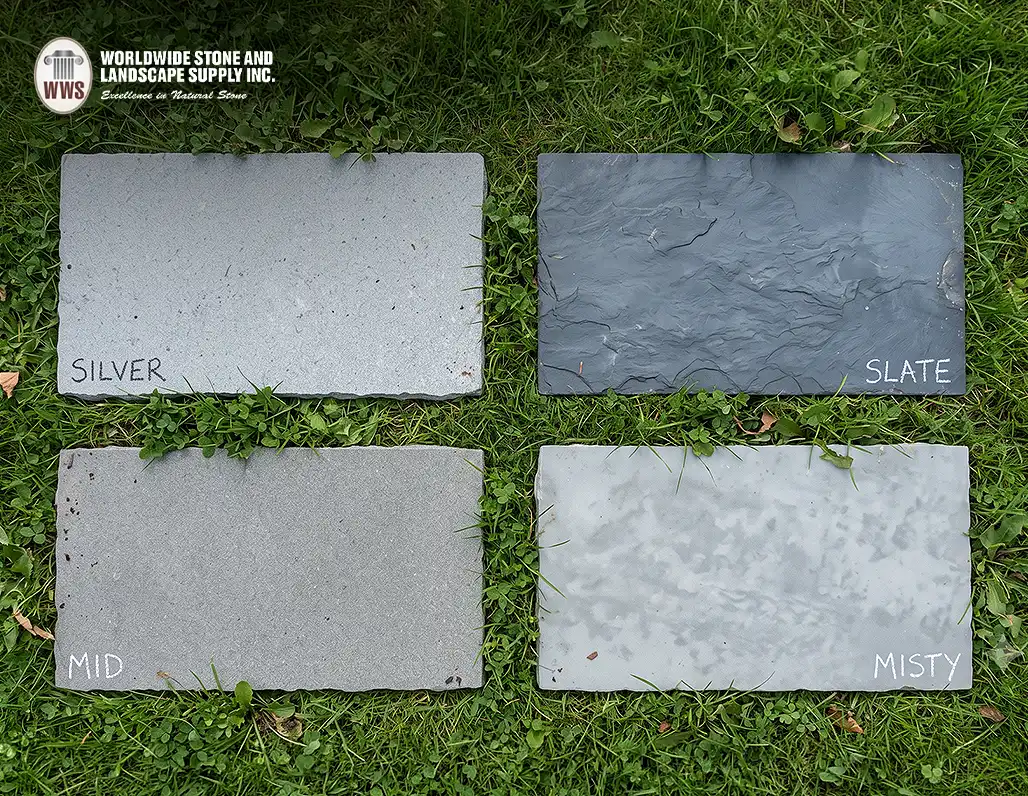
Both styles come in many colours. Dark stones such as Kota Black flagstone make a bold, modern statement. Warm, multi-toned stones such as Modak flagstone patio suit traditional and cottage homes. Cool greys such as Slate Grey sandstone work with almost any exterior.
Want fewer joints than standard pavers allow? Jumbo stone slabs give the cleanest look of all.
Planning Tips Before You Order
A little planning avoids the most common disappointments with both styles:
- See full pieces, not chips. Flagstone shapes and colour vary, so look at whole pieces or a crate.
- Lay out a test area. Dry-fit a few flagstones or pavers on the ground to judge joint width and pattern.
- Order from one batch. Natural stone varies between lots, so buy enough for the whole job at once.
- Add extra for cutting. Allow more for flagstone, which is trimmed to fit, than for pavers laid in a planned pattern.
- Plan the edges. Decide early whether the patio ends in a straight edge, a curve or a planted border.
- Think about drainage. Every patio should slope gently away from the house so water doesn’t pool against the foundation.
These steps take an afternoon and save weeks of frustration later.
Also Read: 5 Common Mistakes to Avoid When Installing Natural Stone Pavers or Steps in Ontario
Quick Decision Guide
Choose flagstone if you want… | Choose pavers if you want… |
|---|---|
A natural, rustic or cottage look | A clean, modern or formal look |
Curving paths through planting | A flat surface for furniture |
Planted joints | Easy snow clearing |
A one-of-a-kind pattern | Faster, more predictable installation |
See Both Styles at Worldwide Stone
The easiest way to decide is to see flagstone and pavers side by side, in daylight, in the colour you like. Browse our natural stone gallery for finished projects, then contact our team to view samples and get a quote on both styles.
Frequently Asked Questions
What is the difference between flagstone and pavers?
Flagstone is natural stone split into irregular shapes, while pavers are cut into regular squares and rectangles. Both can be the same type of stone.
Is flagstone cheaper than pavers?
Not always. Flagstone can cost less to process but more to install, because each piece is fitted by hand. Get quotes on both in the same stone to compare.
Which is better for a patio with furniture?
Pavers. Their even surface and tight joints keep chairs and tables stable.
Can flagstone be laid on gravel?
Yes. Thicker flagstone can be dry-laid on a compacted gravel base. Thinner flagstone is usually set in mortar on a concrete slab.
Are pavers or flagstone easier to shovel in winter?
Pavers are easier to shovel because the surface is flatter and the joints are narrower.
Can I mix flagstone and pavers in one project?
Yes. A paver patio near the house with a flagstone path into the garden is a popular combination.
Does flagstone shift in Ontario winters?
Any patio can shift if water collects in the base. A deep, compacted base and good drainage prevent most frost movement.
What is the most durable stone for flagstone or pavers?
Dense stones with low water absorption hold up best in freeze-thaw climates. Ask your supplier about absorption and thickness for your use.