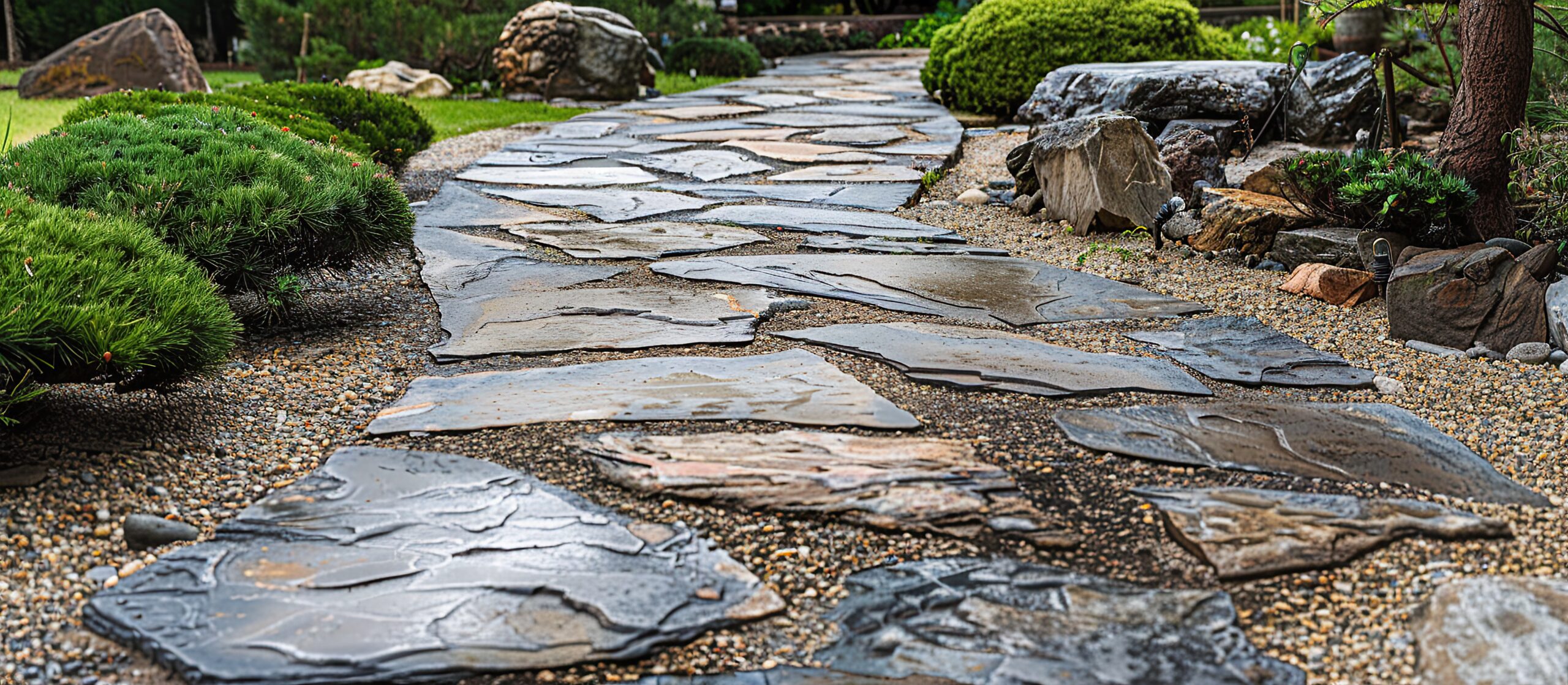
A homeowner in Oakville called us a few springs ago, devastated. She’d had a beautiful natural stone pathway installed the previous fall, gorgeous flagstone steps, the kind that make neighbours slow down and stare. By April, three of them had cracked clean through. The installer had done everything visually right but missed a few critical technical details that Ontario winters simply won’t forgive.
We hear versions of this story every season. Natural stone pavers and steps are one of the best investments you can make for your home’s curb appeal and longevity but only when they’re installed correctly. In this guide, we’re breaking down the five most common mistakes we see on Ontario jobsites, so you can avoid a costly do-over and get a result that actually lasts through -30°C freeze-thaw cycles.
1. Choosing the Wrong Stone for Ontario’s Climate
This is the big one. Not all natural stone is created equal and not all of it belongs in a Canadian winter.
Absorption Rate Is Everything
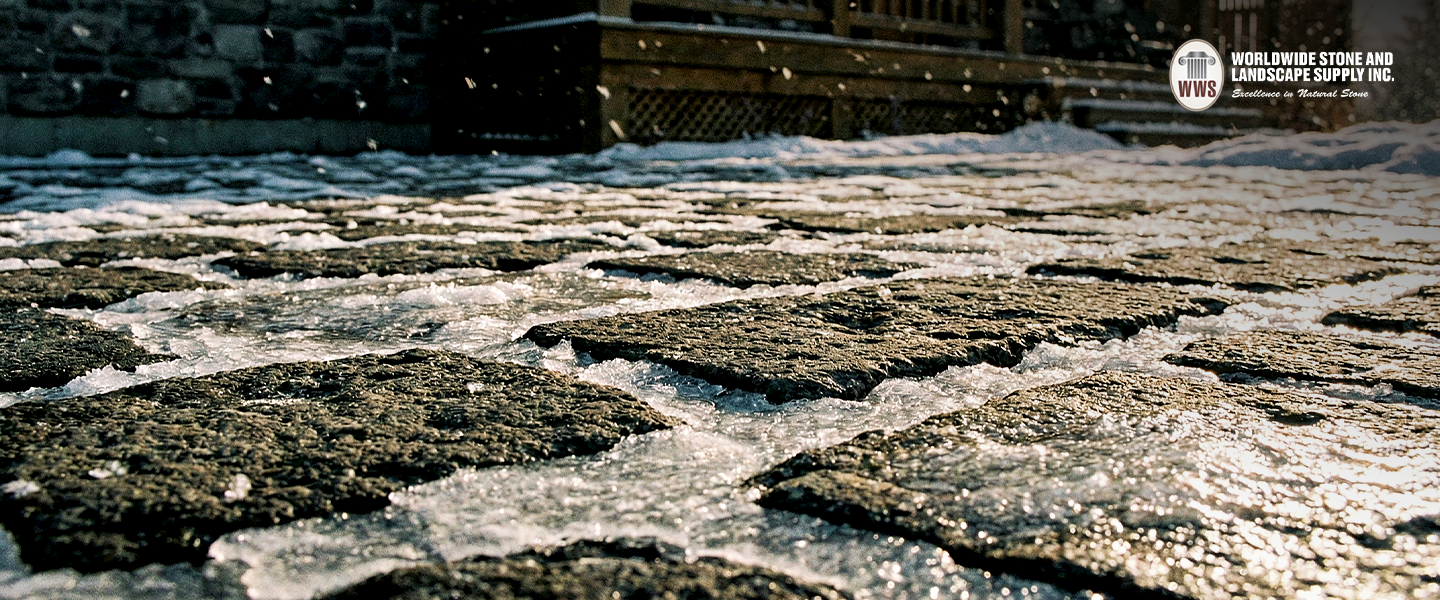
Think of stone like a sponge. Some stones, like certain sandstones or soft limestones, have a high water absorption rate. In Ontario, that water freezes, expands roughly 9% in volume, and literally pushes the stone apart from the inside. We’ve seen gorgeous imported travertine beautiful in a Florida courtyard turn into rubble after one Ontario winter because nobody checked the absorption specs.
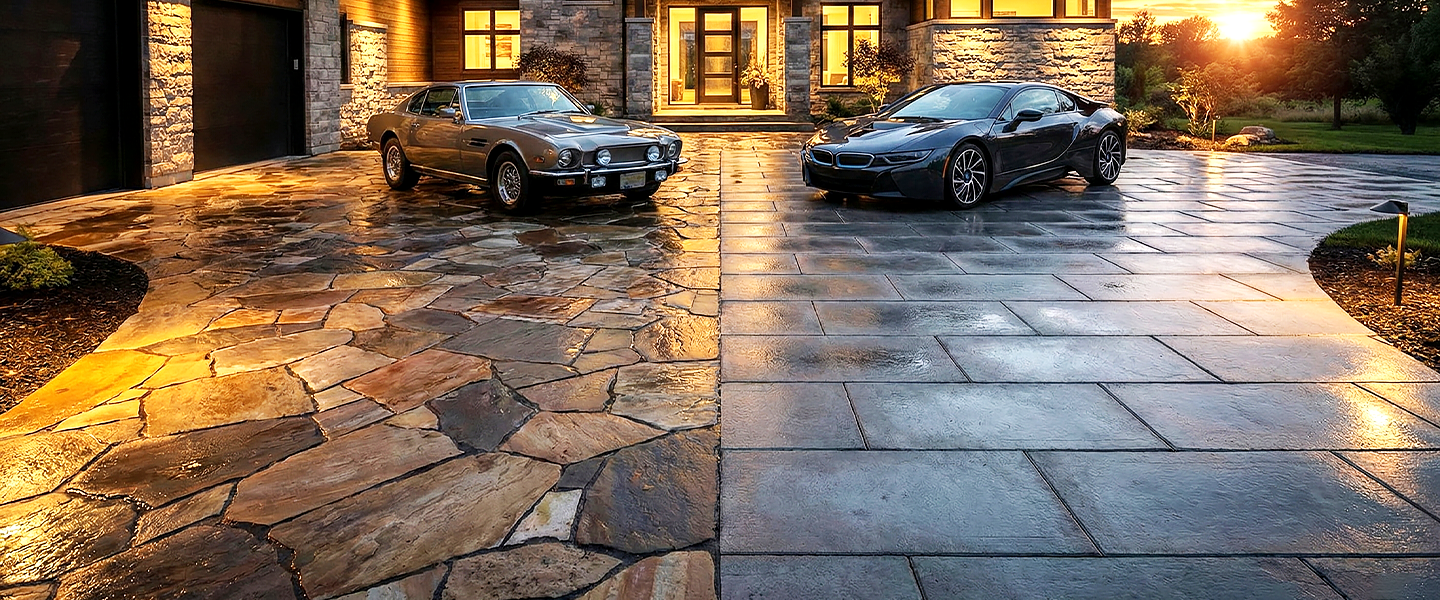
For natural stone pavers in Ontario, you want stone with a water absorption rate under 0.5% for high-exposure areas. Dense granite is our top recommendation for driveways and front steps. Certain quartzites and hard limestones can also perform beautifully but you need to know what you’re buying.
What We Recommend
- Granite pavers and steps: Near-zero absorption, handles freeze-thaw cycles exceptionally well. Our Ontario granite collection includes stones we’ve specifically tested and sourced for cold-climate performance.
- Hard limestone and quartzite: Great mid-range options with proper sealing.
- Avoid for exposed outdoor use: Soft sandstone, standard travertine, and any stone not rated for freeze-thaw conditions per Natural Stone Institute standards.
2. Skipping Proper Base Preparation
If choosing the wrong stone is mistake #1, this is mistake #1B. Honestly, we see this more than anything else, a beautiful stone laid on a base that’s going to fail.
Ontario soil shifts. It heaves. Every frost cycle pushes the ground up, and every thaw lets it settle back down. If your base isn’t engineered to handle that movement, your stone is going to crack, shift, and become a tripping hazard within two or three seasons.
What a Proper Base Actually Looks Like
For installing natural stone pavers in Ontario residential projects, the standard we follow is:
- Minimum 6–8 inches of compacted granular A base (more in frost-prone areas or clay-heavy soil)
- 1 inch of coarse concrete sand for bedding
- Proper slope at least 1–2% grade away from structures for drainage
- Edge restraints to prevent lateral movement
Cutting corners on base depth is almost always about saving money upfront. But a re-installation costs two to three times what the proper base would have. We’ve quoted remediation jobs where the homeowner paid more to fix it than they did for the original install.
A good rule of thumb: if an installer quotes you a suspiciously low price, ask them specifically about base depth. The answer tells you everything.
Invest once in natural stone, enjoy your elegant driveways for decades.
3. Ignoring Drainage The Silent Killer of Stone Installations
Water is stone’s best friend and worst enemy. The right drainage setup lets your natural stone steps and pavers last decades. Poor drainage, and you’re setting a timer on failure.
We’ve seen pooling water cause efflorescence (those chalky white stains), joint erosion, and frost-heave damage all entirely preventable with a bit of planning.
Drainage Mistakes We See Constantly
- Flat or negative slope: Any patio or pathway that directs water toward a house foundation, or sits completely flat, is going to cause problems. Water needs somewhere to go.
- Tight-fitting joints with no drainage path: Some homeowners love the look of tightly fitted stone with minimal joints. Aesthetically, we get it. But water needs to infiltrate or run off completely sealed joints with no drainage plan to trap moisture under the stone.
- No consideration for downspouts or roof runoff: Your beautiful new stone patio sits right under a downspout? That concentrated flow of water in spring runoff is quietly undermining your base every single year.
For complex projects, especially poolside installations (check out some of our Ontario pool and patio projects), a drainage layer or channel drain integrated into the design isn’t optional, it’s essential.
4. DIY Setting Without Understanding Stone-Specific Requirements
We love a good DIY project. But natural stone step installation is one area where we gently but firmly suggest you bring in someone who’s done it before or at least educate yourself deeply before starting.
The Mortar Mistake
One of the most common DIY errors is using the wrong mortar mix or technique. Natural stone is heavy, porous (to varying degrees), and needs appropriate mortar coverage typically 95%+ for steps and high-traffic pavers. Voids under the stone mean it flexes under load, and that eventually cracks it.
Also: never use straight Portland cement against natural stone. The high alkalinity can cause chemical reactions that stain and degrade certain stones. Use a polymer-modified mortar appropriate for natural stone, or consult a spec sheet from the Natural Stone Institute for your specific application.
Cutting Errors
Stone cutting for tight fits requires the right blade and water cooling. We’ve seen DIYers use dry-cut blades that micro-fracture the stone at the cut edge it looks fine initially, then the cut edge starts spalling after the first winter.
The Weight Factor for Steps
Natural stone steps can weigh 200–600 lbs per piece. Installation isn’t just about technique it’s about having the right equipment. A step that shifts even slightly during installation because it was muscled into place by hand often ends up unlevel, which becomes a safety issue.
5. Forgetting to Seal Or Sealing Wrong
Sealing gets mixed reviews. Some old-school installers swear certain stones never need sealing. They’re sometimes right, dense granite, for example, is remarkably resistant on its own. But in Ontario’s harsh climate, we almost always recommend a quality penetrating sealer for outdoor stone, especially for steps and high-moisture areas.
The Real Sealing Mistakes
- Sealing too soon: New stone, especially if set in mortar, needs to fully cure typically 28 days. Sealing too early traps moisture and can cause staining or bond failure.
- Using a topical (film-forming) sealer outdoors: These look great initially but peel, flake, and trap moisture underneath in freeze-thaw conditions. Always use a penetrating impregnating sealer for outdoor Ontario applications.
- Sealing dirty or damp stone: The sealer traps whatever’s on the surface. Clean and completely dry the stone before applying no shortcuts.
- Never re-sealing: Sealers don’t last forever. Depending on traffic and exposure, plan to re-seal every 3–5 years. A simple water droplet test tells you if it’s time if water soaks in instead of beading, you’re due.
For product-specific sealing recommendations, resources like Unilock’s installation and maintenance guides offer useful general guidance, though natural stone has its own requirements distinct from manufactured pavers.
Ontario Winter Tips: What Every Homeowner Should Know
Beyond installation, how you maintain your stone through Ontario winters matters enormously:
- Avoid rock salt (sodium chloride). It’s corrosive to natural stone and will etch surfaces over time. Use calcium magnesium acetate or sand instead.
- Don’t let snow sit and refreeze repeatedly in joints. Clear pathways after major snowfalls.
- Check for movement or rocking steps every spring. Early intervention prevents full failure.
- Reseal after harsh winters if you notice water absorption changing.
Final Thoughts
After 20+ years supplying and installing natural stone across Ontario from Muskoka cottages to Mississauga pool decks to downtown Toronto entranceways – the installations that fail almost always trace back to one of these five mistakes. It’s rarely the stone itself. It’s the decisions made before and during installation.
Natural stone is one of the most enduring, beautiful materials you can choose for your home. Done right, it outlasts everything around it. Done wrong, it becomes an expensive lesson.
If you’re planning a natural stone paver or step project this season, we’d love to help you get it right from the start. Contact our team at WorldWide Stone for a free consultation. We’ll help you choose the right stone for your specific climate zone, application, and budget, and connect you with trusted installation partners across Ontario.
FAQ: Natural Stone Pavers and Steps in Ontario
Q1: Can I install natural stone pavers myself in Ontario?
Small patios with good DIY experience? Possibly. Steps, driveways, or large areas? We genuinely recommend professional installation. The base work alone requires the right equipment and knowledge of local soil conditions.
Q2: What's the most durable natural stone for Ontario winters?
Dense granite is our top pick for low absorption, incredible strength, and it looks stunning for decades. Certain hard quartzites are a close second. Always ask for freeze-thaw test data before purchasing.
Q3: How thick should natural stone pavers be for a driveway?
Minimum 3 cm (1.25 inches) for pedestrian areas, 4–5 cm for driveways with vehicle traffic. Thinner stone simply isn’t appropriate for vehicular loads.
Q4: Why are my stone pavers developing white stains?
That’s efflorescence mineral salts migrating to the surface with water movement. It usually points to moisture issues in the base or joints. It’s treatable but worth investigating the root cause.
Q5: How long do natural stone pavers last?
Properly installed and maintained natural stone pavers can last 50–100+ years. We have clients in Ontario with stone pathways installed decades ago that still look incredible. The key word is “properly.”
Q6: Is natural stone more expensive than concrete pavers?
Often yes, upfront. But natural stone typically outlasts concrete pavers in freeze-thaw climates and adds more long-term home value. When you spread the cost over a 50-year lifespan, the math usually favours natural stone.