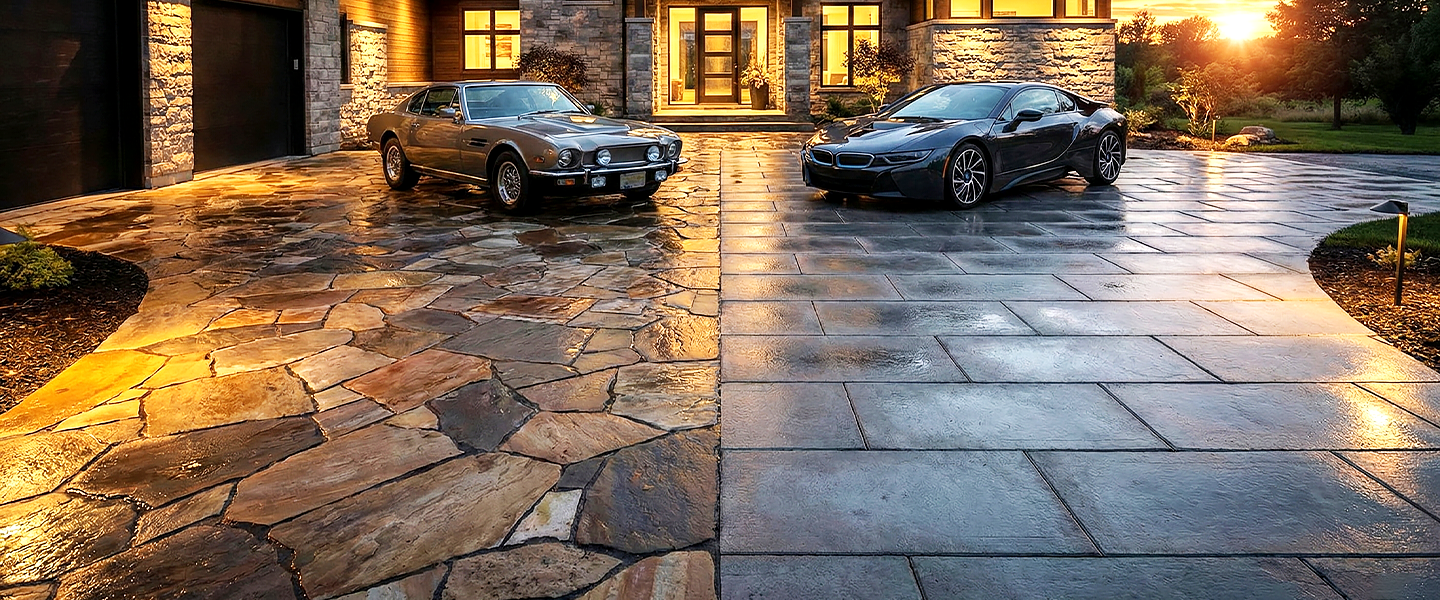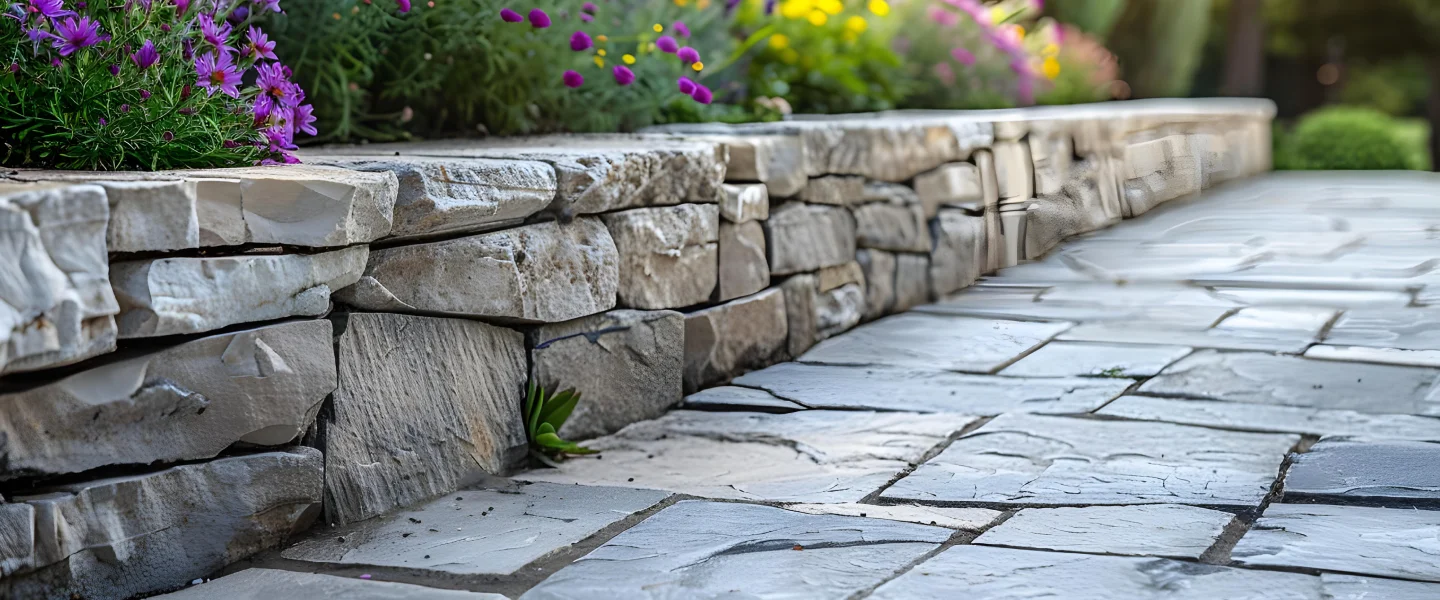
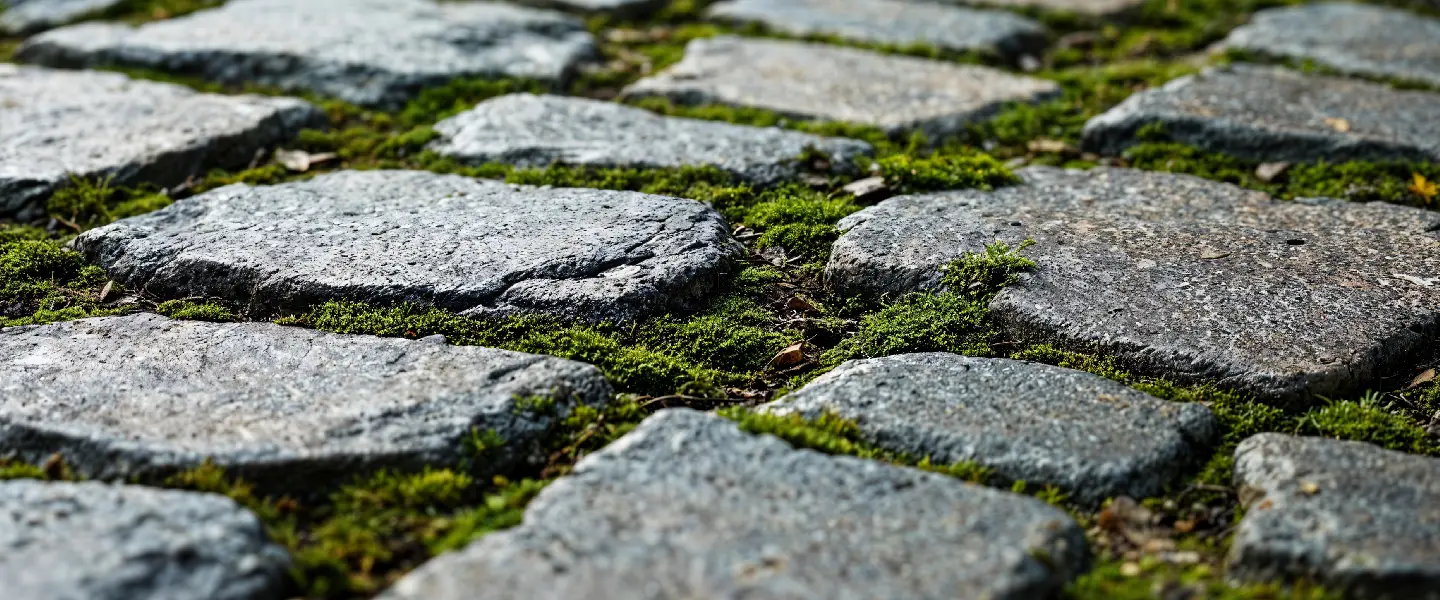
Picture this: You walk out to your backyard through the patio you invested in two summers ago.
But something catches your eye. A crack running clean across a slab. The natural stone paver that looked stunning in September now looks like something pulled from a demolition site.
You won’t believe it – we’ve heard the same story from many of our clients.
Honestly, neither they nor you did anything wrong, intentionally. You picked the stone you love. But it might not be suitable to survive in harsh Ontario winter environments.
The science behind is nothing but lower porosity. It makes lower resistance through months of freezing, thawing, refreezing, and moisture moving deeper with every cycle.
Worry not! This blog is built to guide you through facts that actually matter, an honest stone-by-stone breakdown, and the installation details that make or break even the best material. No filler.
Let’s start!
What Is a Freeze-Thaw Cycle?
Water, morning dew, or raindrops stay into tiny pores. The trapped water freezes when temperature drops below 0°C. It starts expanding after the ice is formed. That causes microcracks. What catches you off guard is that the surface looks fine for a long time.
However, by the start of blooming spring, the ice starts melting down, gradually. But the cracks remain there. And, the process repeats itself every year. That’s what we call freeze-thaw cycle.
As a result, the stone loses its strength. Water can go deeper to the mortar bed. And, a number of cycles accumulate to cause visible damage. Cracking, flaking, or spalling, whatever it’s.
Which Factors Determine A Better Freeze-Thaw Survival Condition?
The volume and density of pores available in the stone actually determine the longevity of your stone.
High-porosity stone absorbs more, faster. Very fine pores are often more damaging than large ones. Fine pores retain water by capillary tension, which cannot drain easily, hence retaining the water at the time of the freeze. In fact, a quite dry dry stone, as opposed to a wet stone, has an advantage when it comes to the freeze event.
So, before you go for installation, you must ask about certain key numbers. Here they are:
- Water absorption rate: Ideally, water absorption rate under 0.5% in any natural stone can support longevity of driveways and pool areas. Under 0.75% is acceptable for patios. But when it goes up above 1.5%, you need to be very careful with the application and installation process.
- Compressive strength: This factor alone decides how much load the stone can bear. Driveways, landing steps, retaining wall coping, or patios, ideally the range of compressive strength should lie between 80+ and 130 MP.
- Flexural strength: When you want to know how much the stone can resist bending under load, check flexural strength. Important for larger-format slabs spanning between supports.
- Frost resistance rating: Standardized freeze-thaw testing typically runs 30–50 cycles to show preliminary performance. A stone that shows failure at or before 50 cycles won’t survive more than a couple of Ontario winters. You need to look for stones tested to 50+ cycles with no degradation.
The Best Natural Stones for Freeze Thaw Resistance in Ontario Climate
Whether it’s a patio, driveway, landing walkways, or retaining wall, the stone you want must meet durability, aesthetic appeal, and natural texture. It’s important as you’ll not just be dealing with freeze-thaw but constant lateral soil pressure and drainage management.
So, let’s see which natural stones can meet your expectations:
#1. Granite
If we’re being direct: granite is the most reliably freeze-thaw resistant natural stone for patios in Ontario. Honestly, it’s the first thing we suggest for driveways and high-exposure areas.
Why? Granite is an incredibly dense and low porosity material. While its lower absorption rate, ideally under 0.4%, makes it ideal for surviving better in a freeze thaw condition, the higher compressive strength prevents dwarfs.
From Granite cobblestones, pavers to slabs, we’ve installed them across the GTA, Barrie, Oakville, and beyond. We’ve genuinely never fielded a complaint about winter cracking from a properly installed granite project. That’s a 20-year track record we feel good about.
How does it look?
Granite also happens to look excellent. Dense, crystalline Granite stone appears in colors from classic black absolute and charcoal grey to warm beige. Sometimes it comes with a blush pink to silver-blue shed too.
Best applications in Ontario:
- Driveways and driveway edging
- Entrance steps, thresholds, and landings
- High-traffic patios and outdoor dining areas
- Retaining wall capping
#2. Quartzite
Quartzite is our quietly confident recommendation for pool surrounds and exposed outdoor steps. It doesn’t get the same name recognition as granite, but technically it’s just as impressive.
Why? Usually, it provides a very good freeze haw resistance as its water absorption rate is often under 0.5%. And, the natural surface texture gives it a slip-resistance that makes it ideal anywhere wet feet are involved.
How does it look?
Aesthetically, quartzite leans toward whites, creams, silvers, and warm golds. It has an almost marble-like elegance without marble’s vulnerability to cold and acid.
Best applications in Ontario:
- Pool coping and surrounds
- Outdoor steps and garden pathways
- Exposed residential patio areas
- Retaining wall face cladding
#3. Limestone
Limestone is one of the most requested stones we carry, and honestly, we understand why. With a light grey, buff, or beige tone, the limestone suits both traditional and contemporary outlook.
Dense, low-porosity limestone like the hard varieties can absolutely perform well in Ontario conditions when properly specified. What makes limestone best as permeable pavers is its work in a cold climate comes down to controlling moisture at installation.
The seal between the stone and mortar bed needs to be tight. Otherwise, gaps in the mortar interface allow moisture to accumulate beneath the stone. That exactly causes poor performance in soft limestone.
So, how you can ensure what’s good. You can check this:
- Water absorption under 1%
- Mohs hardness of at least 3-4
- A sealed mortar bed with no voids
- Minimum 30mm thickness for patios
- And, 40mm+ for any vehicle exposure
Best applications in Ontario:
- Formal patios under covered structures or pergolas
- Garden wall cladding and feature walls
- Entrance surrounds and architectural details
#4. Sandstone
Sandstone has a character that’s hard to replicate. Beige, bronte, or ivory sandstones are warm, earthy, and slightly rustic. It fits the photographic elegance well.
However, the sedimentary formation of sandstone makes its uses really challenging. Usually, its water absorption rates remain high, above 3% in free-thaw condition.
No worries! We’ve imported Indian sandstone varieties with absorption rates under 2%. That really works well as freeze-thaw resistance in Ontario’s climate.
Where sandstone can work in Ontario:
- Covered patio areas with excellent drainage
- Decorative garden walls (non-structural)
- Interior-to-exterior transitional spaces
#5. Travertine
We stock travertine because used in the right context, it’s genuinely wonderful. The warm, creamy tones and unique texture create an outdoor space that feels like it belongs in a resort. But travertine in a harsh Ontario winter without shelter is a project that may disappoint you.
Where travertine does work in Ontario:
- Covered porches and loggia
- Outdoor kitchens with overhead structure
- Interior-to-exterior transitional areas
- Indoor feature floors
#6. Flagstone
Flagstone is widely known for its durable concrete paving. It’s a flat, irregular earthy slab like stone that comes in grey, rust, and brown color. From handling a heavy foot traffic in pedestrians to bearing light vehicular traffic, it performs really well in both conditions. However, if you’re using an outdoor area, you must check its water absorption rate as low as less than 2%.
Where flagstone does work in Ontario:
- Pool surrounding areas
- Garden pathways and walkways
- Stepping stones across lawns and garden beds
- Patio and retaining walls
Installation Matters as Much as Stone Selection to Maintain Freeze-Thaw Resistance
This is something the industry doesn’t talk about enough. You can source the finest granite in silver grey or black available and still have a project fail, if installation is done wrong. So, let’s check the installation details that actually protect your project:
- Tight mortar joints: Fully filled, no voids, especially at the stone-to-bed interface.
- Proper drainage slope: Patios should have a minimum 1–2% fall away from structures.
- Adequate base depth: In Ontario, a compacted granular A base of 150–200mm minimum under paving; deeper for driveways.
- Expansion joints: Natural stone moves slightly with temperature; joints allow that movement without cracking.
- Sealing porous stones before winter: Limestone, sandstone, and travertine need a quality penetrating sealer before first frost, and reapplication every 2–3 years.
Common Mistakes Ontario Homeowners Make that You Must Avoid
We see certain common mistakes while installing natural stone pavers that lower freeze-thaw resistance. From our years of experience, we’re providing you tips that can save you money and headache.
- Choosing stone based on looks alone: A stone that’s gorgeous in a showroom may have an absorption rate of 4%. Always ask for the technical data sheet before committing.
- Using patio-grade stone for driveways: A 20mm slab designed for foot traffic is not engineered for vehicle loads. Driveways need minimum 40mm thickness and higher compressive strength specifications.
- Skipping proper base preparation: Even the best granite will crack on an unstable or frost-susceptible base. The base is as important as the stone.
- Assuming thickness can serve better: Stone thickness helps with structural load, not porosity. A thin slab of granite outperforms a thick slab of porous limestone every time.
- Using calcium chloride or rock salt directly on stone: These accelerate surface degradation significantly. Use sand for traction, or magnesium chloride products that are documented as stone-safe.
- Not attending to proper drainage maintenance: Water that can’t move away from stone will find a way to damage it. Every installation needs a clear drainage path.
Wrapping Up!
Ontario winters are a genuine performance test for outdoor stone. Landscaping in patios, driveways, or retaining walls today isn’t just about curb appeal. It’s more about endurance in freeze-thaw climates that enhances everyday living.
So, whether you want to give your outdoors a fresh touch or complete transformation – we’re here for you. Beyond the quality of natural stones, we can help you in better installation, drainage planning, proper base work, and a sealed mortar interface.
By booking a free consultation with WorldWide Stone, you can share with us what you’re building, where you are in Ontario, and we’ll handle the rest of the things.
Frequently Asked Questions
Q1: What is the most freeze-thaw resistant natural stone for Ontario patios?
We’ve seen granite is consistently the strongest performer in Ontario freeze-thaw conditions. Its water absorption rate is typically below 0.4%, and its compressive strength handles both vehicle traffic and the repeated stress of cycling temperatures. Quartzite is a close second, particularly for pool surrounds and steps.
Q2: How many freeze-thaw cycles can natural stone handle?
Research suggests most stone damage accumulates between 50 and 125 cycles. Properly specified stones with low absorption and tested frost resistance are rated to withstand better longevity.
Q3: Does a thicker slab serve better freeze-thaw resistance?
Not necessarily. While thickness improves load capacity, it doesn’t mean to have porosity. For example, a thick slab of high-porosity limestone can fail easily in freeze-thaw conditions while compared to a thinner slab of a low-absorption stone like granite.
Q4: Can I use limestone for a driveway in Ontario?
Only if you can give it utmost care. Typically, low-porosity limestone can handle light residential traffic. So, we generally recommend granite for heavy foot traffic abd any vehicle-bearing surface.
Q5: Does natural stone need to be sealed in Ontario winters?
Granite generally doesn’t require sealing. Limestone, sandstone, and travertine benefit significantly from a penetrating sealer. It reduces absorption and slows freeze-thaw damage. Apply before the first fall frost and reapply every 2–3 years.
Q6: How do I know if a stone is actually freeze-thaw rated?
You can ask the supplier for a technical data sheet showing water absorption rate, compressive strength, and ideally freeze-thaw cycle test results. If you choose us, WorldWide Stone, we can provide the data with you as soon as you connect with our consultant.