20mm porcelain pavers are thick, dense outdoor tiles made for patios, walkways and pool decks. At about 2 cm thick, they’re roughly twice the thickness of typical indoor tile, which lets them be laid on gravel, on pedestals or bonded to concrete. Their low water absorption and consistent colour make them a popular choice for clean, modern outdoor spaces.
Outdoor porcelain has grown quickly in Ontario because it offers the look of stone, wood or concrete with a very uniform finish. But it isn’t installed like indoor tile, and it isn’t installed exactly like natural stone either. Knowing the differences before you buy saves money and avoids problems.
This guide explains what 20mm porcelain is, how it’s installed, which colours suit which homes and how to look after it.
What Are 20mm Porcelain Pavers?
Porcelain is a type of ceramic tile made from refined clays and minerals fired at very high temperatures. Under the ANSI A137.1 standard, porcelain tile is defined by water absorption of 0.5% or less. That low absorption is a key reason porcelain resists staining and freeze-thaw damage when installed correctly.
“20mm” refers to the thickness. Outdoor porcelain pavers are made thicker than indoor tiles so they can carry foot traffic and furniture outdoors, including when laid without a concrete slab underneath.
Feature | 20mm outdoor porcelain | Standard indoor porcelain tile |
|---|---|---|
Typical thickness | About 20 mm | About 8–10 mm |
Installation | Gravel bed, pedestals or bonded to concrete | Bonded to a rigid floor |
Surface | Textured for grip outdoors | Often smooth or polished |
Load | Designed for outdoor foot traffic | Indoor floors only |
Freeze-thaw | Rated for outdoor use | Not designed for exterior use |
Why Homeowners Choose Outdoor Porcelain
- Low water absorption helps resist stains, moss and freeze-thaw damage.
- Consistent colour across every piece gives a clean, modern look.
- Easy cleaning with water and a mild cleaner; most spills don’t soak in.
- Textured surfaces designed for grip in wet conditions.
- Lightweight compared with thick stone slabs of a similar size, making handling easier.
- Fade-resistant colour, because the colour is fired into the tile.
Porcelain isn’t perfect for every space. It can chip if edges are hit hard, and cutting it needs a diamond blade. For a full comparison with natural stone, see our guide below.
Also Read: Natural Stone vs Porcelain Pavers for Canadian Driveways
Porcelain Colours at Worldwide Stone
Our outdoor porcelain range includes four colours, from deep black to soft grey:
Colour | Tone | Look | Best for |
|---|---|---|---|
Deep, solid black | Sleek, bold, modern | Feature patios, borders, contemporary homes | |
Black with natural stone-like character | Rich, textured, slate-inspired | Patios and pool surrounds wanting a natural look | |
Soft light grey | Calm, airy | Pool decks, small yards, modern-classic homes | |
Mid to dark grey | Balanced, versatile | Walkways, family patios, outdoor kitchens |
Dark colours absorb more sun and can feel warm underfoot in July. For pool decks in full sun, Dove Grey is usually the most comfortable choice.
How 20mm Porcelain Pavers Are Installed
There are four common methods. The right one depends on the area, the ground underneath and how the space will be used.
1. On a Compacted Gravel Base (Dry-Lay)
This is the most common method for backyard patios. The area is excavated, a compacted aggregate base is built, and the pavers are laid on a levelling bed of fine aggregate. Joints are filled with a jointing compound suitable for porcelain.
Good for: patios, walkways and garden areas on natural ground.
2. On Adjustable Pedestals
Pavers sit on plastic pedestals at each corner, creating a raised, level floor with an open gap underneath. Water drains through the joints and below the surface.
Good for: rooftop terraces, balconies, flat roofs and areas over waterproofed slabs.
3. Bonded to a Concrete Slab (Wet-Lay)
Pavers are fully bonded to a sound concrete slab using an exterior tile adhesive or bonding slurry, then grouted. This creates a very rigid surface.
Good for: pool decks, front entrances and areas with an existing concrete slab in good condition.
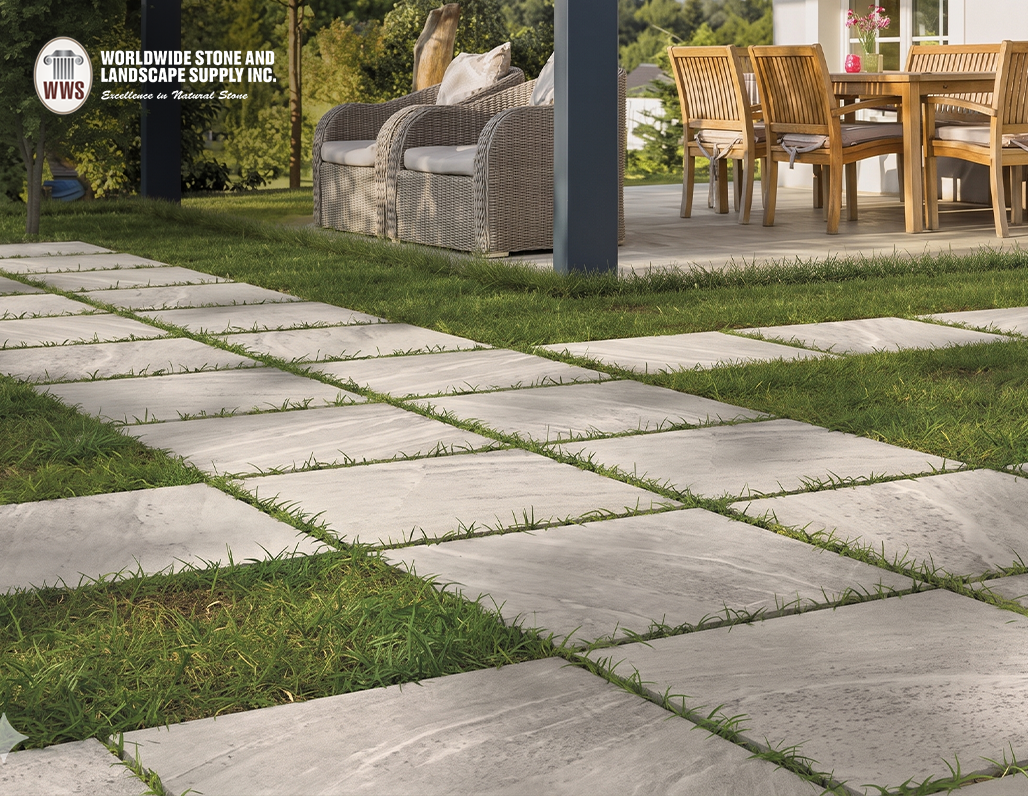
4. Stepping Stones on Grass or Gravel
Individual pavers can be set into lawn or gravel as stepping stones, each bedded on a small compacted base.
Good for: simple garden paths and side yards.
Method | Base | Drainage | Effort | Best use |
|---|---|---|---|---|
Dry-lay on gravel | Compacted aggregate | Through joints and base | Moderate | Backyard patios |
Pedestals | Waterproofed slab or roof | Open below surface | Low to moderate | Rooftops, balconies |
Bonded to concrete | Sound concrete slab | Surface slope | Higher | Pool decks, entrances |
Stepping stones | Small compacted pads | Natural ground | Low | Garden paths |
Ontario-Specific Installation Tips
Our freeze-thaw winters are hard on any outdoor surface. With porcelain, the tile itself absorbs very little water, so problems usually come from the base or the bond:
- Build a well-drained base. Water trapped under pavers freezes, expands and lifts them.
- Slope the surface away from the house so meltwater drains off.
- Use exterior-rated adhesives if bonding; indoor products can fail in frost.
- Back-butter bonded tiles for full contact, so there are no hollow spots where water can collect.
- Leave movement joints in large bonded areas.
- Follow the jointing product’s temperature limits. Most can’t be applied near freezing.
Cutting and Handling Porcelain
Porcelain is very hard. Cut it with a wet saw or angle grinder fitted with a diamond blade designed for porcelain. Wear eye and hearing protection and a suitable mask, since cutting creates fine dust.
Handle pavers on edge rather than flat to reduce the risk of cracking, and protect corners from knocks during installation.
Also Read: Permeable Pavers for Canadian Homes: Do They Survive Freeze-Thaw?
Caring for Outdoor Porcelain
Porcelain is one of the easiest outdoor surfaces to maintain:
- Sweep regularly to remove grit and leaves.
- Wash with water and a mild, non-abrasive cleaner. A soft brush handles most dirt.
- Rinse off salt in spring.
- Check joints each spring and top up jointing material if needed.
- No sealing needed for the tile itself in most cases, because water absorption is so low.
Use a plastic shovel for snow and avoid metal edges that can chip tile corners.
Planning a Porcelain Patio: Step by Step
- Measure the area and sketch the shape, noting doors, steps and drains.
- Choose the installation method based on what’s underneath: natural ground, a concrete slab or a roof.
- Pick a colour and size. Larger formats mean fewer joints but need a flatter base.
- Plan the layout so cuts fall at the edges, not in the middle of the space.
- Add extra material for cuts and breakage, plus a few spare pieces for future repairs.
- Choose matching details such as steps, coping and edging so the whole project looks planned.
- Book installation for the right season. Bonding and jointing products need temperatures above freezing to cure properly.
Porcelain rewards careful planning. Because every piece is the same colour and size, uneven joints or awkward cuts show more than they would with natural stone, so the layout drawing is worth the extra time.
Is 20mm Porcelain Right for Your Project?
Choose 20mm porcelain if you want… | Consider natural stone if you want… |
|---|---|
A very uniform, modern look | Natural variation and character |
Minimal staining and easy cleaning | A surface that ages and gains patina |
Rooftop or pedestal installation | Rustic flagstone or tumbled finishes |
Colour consistency across large areas | Traditional heritage styles |
Many projects combine both: porcelain on a modern patio with natural stone steps, coping or edging.
See Our Porcelain Range in Person
Colour and texture matter more than photos can show. Visit our Caledon stone yard to see Jet Black, Black Brazilian, Dove Grey and Grave Grey side by side, and contact our team for sizes, availability and a quote.
Frequently Asked Questions
What does 20mm porcelain mean?
It refers to the thickness of the paver, about 2 cm. That’s thicker than indoor tile, so it can be used outdoors on gravel, pedestals or concrete.
Can 20mm porcelain pavers be laid on gravel?
Yes. They can be dry-laid on a compacted, well-drained aggregate base with a suitable levelling bed and jointing compound.
Do porcelain pavers crack in Ontario winters?
Porcelain absorbs very little water, so the tile itself resists freeze-thaw damage. Cracking usually comes from a poor base or a hollow bond.
Do porcelain pavers need sealing?
Usually not. Porcelain’s water absorption is 0.5% or less, so most outdoor porcelain doesn’t need sealing. Joints still need checking.
Are porcelain pavers slippery when wet?
Outdoor porcelain is made with textured surfaces for grip. Choose a product rated for outdoor and pool use.
Can porcelain pavers go on a balcony or rooftop?
Yes. Pedestal installation is common on rooftops and balconies because it keeps the surface level and lets water drain underneath.
How do you cut porcelain pavers?
Use a wet saw or angle grinder with a diamond blade made for porcelain, and wear eye, ear and dust protection.
Do black porcelain pavers get hot?
Dark porcelain absorbs more sun than light colours. For full-sun pool decks, a lighter colour such as Dove Grey stays cooler.