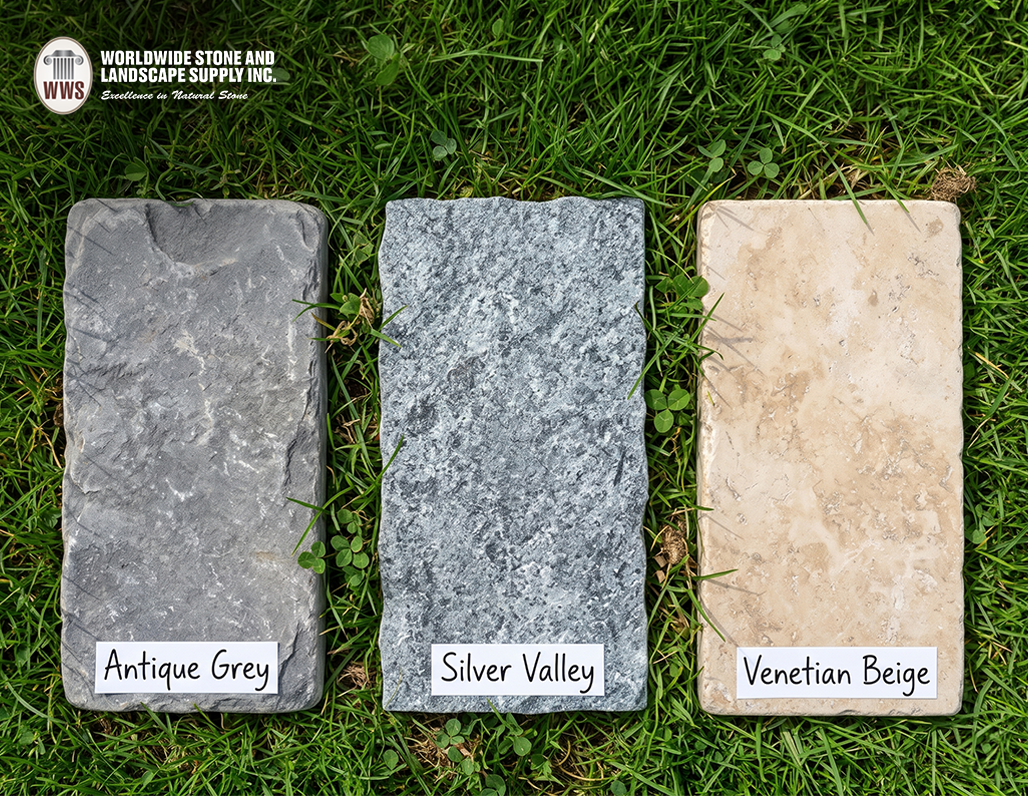
Limestone gives patios a smooth, refined look with calmer colour than most sandstone. Antique Grey offers a cool, classic grey, Silver Valley a lighter silvery tone and Venetian Beige a soft, warm cream. The right choice depends on your home’s colours, how much sun the area gets and the style you want.
Limestone is a favourite with designers because it looks tailored. Its colour is usually more even than sandstone, its surface can be finished very smoothly and it suits both modern and traditional architecture. It also needs slightly different care, which we cover below.
This guide compares three limestone colours side by side so you can narrow your choice before visiting a stone yard.
What Makes Limestone Different?
Limestone is a sedimentary stone made mainly of calcium carbonate. That composition gives it a few traits worth knowing:
Trait | What it means for you |
|---|---|
Even colour | Less variation piece to piece than many sandstones |
Smooth texture | Takes honed and sawn finishes well for a refined look |
Dense varieties | Quality paving limestone holds up well outdoors when properly installed |
Acid sensitivity | Lemon juice, vinegar, some wines and acidic cleaners can etch the surface |
Classic appeal | Suits heritage homes, modern builds and everything in between |
If you’re still deciding between stone types, our guide to natural stone in the Canadian climate explains how different stones handle Ontario winters.
Antique Grey Limestone
Antique Grey Limestone in Ontario is a cool, medium grey with subtle natural variation. It looks strong and understated, with a classic feel that works on almost any home.
Best for:
- Patios and walkways on grey, white or black exteriors
- Driveways and entrances where a mid-tone hides dirt well
- Steps and landings that need a calm, consistent colour
- Modern homes that want grey without going too dark
Keep in mind: a mid-grey hides everyday dirt better than very light or very dark stone, which makes Antique Grey one of the most practical choices for busy family spaces.
Silver Valley Limestone
Silver Valley limestone is a lighter, silvery grey with a fresh, contemporary look. It brightens a space more than Antique Grey while still reading as grey rather than beige.
Best for:
- Modern patios with clean lines
- Pool decks that need a lighter, cooler-feeling surface
- Indoor-outdoor designs with grey interior flooring
- Small yards where a lighter stone opens up the space
Keep in mind: lighter stones show leaf tannins and spills sooner, so sealing and regular sweeping are worth the effort.
Also Read: Limestone vs Sandstone Pavers: Which Performs Better in Canada?
Venetian Beige Limestone
Venetian Beige limestone has soft, warm beige tones with a timeless, elegant feel. It brings warmth without the strong pattern or colour variation of many sandstones.
Best for:
- Traditional and Mediterranean-style homes
- Homes with cream, buff or warm brick exteriors
- Pool decks and patios that should feel warm but light
- Formal entrances and front walkways
Keep in mind: Venetian Beige pairs beautifully with darker accents. Consider a contrasting step edge or border to frame large areas.
Three Limestones Side by Side
Feature | Antique Grey | Silver Valley | Venetian Beige |
|---|---|---|---|
Tone | Cool mid-grey | Light silver-grey | Soft warm beige |
Variation | Subtle | Subtle | Subtle to moderate |
Feel | Classic, strong | Fresh, modern | Warm, elegant |
Hides dirt | Very well | Moderately | Moderately |
Heat in sun | Medium | Cooler | Cooler |
Pairs with | Black trim, grey siding, white brick | Glass, steel, light wood | Cream stucco, warm brick, wood |
Colour varies between quarry batches. Confirm with current samples before you order.
Which Finish Suits Limestone?
Finish | Look | Feel | Best use |
|---|---|---|---|
Honed or sawn | Smooth, matte, refined | Smooth underfoot | Covered patios, modern designs |
Flamed or sandblasted | Slightly lighter, textured | More grip | Pool decks, steps, driveways |
Tumbled | Softened edges, aged look | Gently textured | Heritage homes, cottage paths |
Natural cleft | Layered, natural surface | Textured | Rustic paths and walls |
For wet areas, choose a textured finish. Smooth honed limestone looks beautiful but can be slippery when wet.
Caring for Limestone in Ontario
Limestone’s main weakness is acid. Protect it with a few simple habits:
- Use pH-neutral cleaners only. Avoid vinegar, lemon-based products and acidic patio cleaners.
- Wipe spills fast. Wine, juice, coffee and some fertilizers can etch or stain.
- Seal as recommended. A breathable impregnating sealer helps resist stains and water absorption.
- Be careful with de-icers. Use them sparingly, avoid harsh chemicals and rinse the stone in spring.
- Sweep regularly. Grit acts like sandpaper underfoot.
- Keep fertilizer off the surface. Sweep granules back onto the lawn right away.
The Natural Stone Institute also publishes independent guidance on cleaning and caring for natural stone.
Design Ideas Using Limestone Colours
Project | Suggested limestone | Accent idea |
|---|---|---|
Modern backyard patio | Silver Valley, large rectangles | Black border for definition |
Family patio and walkway | Antique Grey | Matching steps and coping |
Mediterranean pool deck | Venetian Beige | Light coping, terracotta planters |
Front entrance | Antique Grey | Natural stone stair treads in the same stone |
Raised patio | Venetian Beige | Natural stone risers in a contrasting grey |
Bold contrast | Silver Valley | Antique Black limestone inlay |
Also Read: Granite vs Travertine vs Limestone for Pool Coping in Ontario Winters
How Limestone Colour Changes Over Time
Limestone colour is stable, but the surface does change gently with use and weather. Expect these shifts:
- Wet vs dry: all three stones darken noticeably when wet, then return to their dry colour as they drain.
- First season: fresh-cut stone can look slightly brighter than it will after a few months outdoors.
- Sun exposure: surfaces in full sun may mellow a little over the years, which most people find adds character.
- Sealed stone: a natural-look sealer barely changes colour; a colour-enhancing sealer deepens it permanently.
- Traffic paths: heavily used routes can become slightly smoother and lighter than quiet corners.
None of these changes affect performance. They’re part of why natural stone looks better with age than concrete or manufactured pavers.
Mistakes to Avoid When Choosing a Limestone Colour
- Choosing from a phone screen. Screens shift colour; grey can look blue and beige can look pink. Always see real stone.
- Looking at one small sample. Judge several full pieces so you see the natural range.
- Ignoring the roof. The roof is often the largest colour block on a house. Match the stone to it as well as the walls.
- Picking a smooth finish for wet areas. Use flamed, sandblasted or tumbled finishes around pools and on steps.
- Forgetting coping and steps. Decide on edges, steps and walls at the same time as the patio so colours are planned together.
- Ordering too little. Buy enough from one batch, plus extra for cuts and future repairs.
Grey or Beige Limestone: How to Decide
Ask these questions:
- What colour is your roof and trim? Cool grey roofs and black trim suit Antique Grey and Silver Valley. Warm brown roofs suit Venetian Beige.
- How much sun does the area get? In full sun, lighter Silver Valley or Venetian Beige stays cooler underfoot.
- How busy is the space? For kids, pets and heavy use, Antique Grey hides dirt best.
- Modern or traditional? Silver Valley leans modern, Venetian Beige classic, Antique Grey works either way.
Still unsure? Lay two samples on the ground near the house, wet them, and look at them morning and evening. The right stone usually becomes obvious.
If two colours still feel equally right, think about maintenance. A busy family patio with a barbecue and kids’ toys is easier to live with in Antique Grey, while a quieter, sunny pool deck shows off the lighter tones of Silver Valley or Venetian Beige.
See Limestone Colours at Worldwide Stone
Limestone’s subtle tones are best judged in person and in daylight. Contact our team to arrange a visit to our Caledon stone yard and compare Antique Grey, Silver Valley and Venetian Beige side by side.
Frequently Asked Questions
Which limestone colour hides dirt best?
Antique Grey usually hides everyday dirt best, because mid-tone grey disguises dust and leaves better than very light or dark stone.
Is limestone good for patios in Ontario?
Yes. Dense paving limestone performs well outdoors when it’s installed on a well-drained, compacted base and maintained properly.
Can limestone be used around a pool?
Yes, with a textured finish such as flamed or sandblasted for grip. Seal it and rinse off pool chemicals regularly.
Does limestone stain easily?
Limestone can stain and etch from acidic spills. Sealing and quick clean-ups prevent most problems.
What cleaner is safe for limestone?
Use a pH-neutral stone cleaner. Avoid vinegar, lemon-based cleaners and acidic patio products, which can etch the surface.
Is grey or beige limestone more popular?
Grey has been more popular in recent years, but warm beige is gaining ground with homeowners who want a softer, more traditional look.
Is limestone more uniform than sandstone?
Generally yes. Limestone usually has calmer, more even colour, while many sandstones have stronger variation and patterns.
Do limestone pavers need sealing?
Sealing is often recommended outdoors to reduce staining and water absorption. Follow your supplier’s advice for the specific stone.