Polymeric sand suits natural stone laid on a compacted gravel base, because it stays slightly flexible as the ground moves. Mortar suits stone bonded to a solid concrete slab, because it creates a rigid joint that needs a rigid base underneath. The single most important rule is simple: match the joint to the base.
Joints may look like a small detail, but they control weeds, ants, washout and how a patio looks after a few winters. Choose the wrong joint for your base and you’ll see cracks, loose stones or sand in the lawn by spring.
This guide compares polymeric sand and mortar side by side, explains when to use each, and covers other joint options for natural stone.
How the Base Decides the Joint
Natural stone patios are built in one of two ways:
Installation type | What’s underneath | Behaviour | Matching joint |
|---|---|---|---|
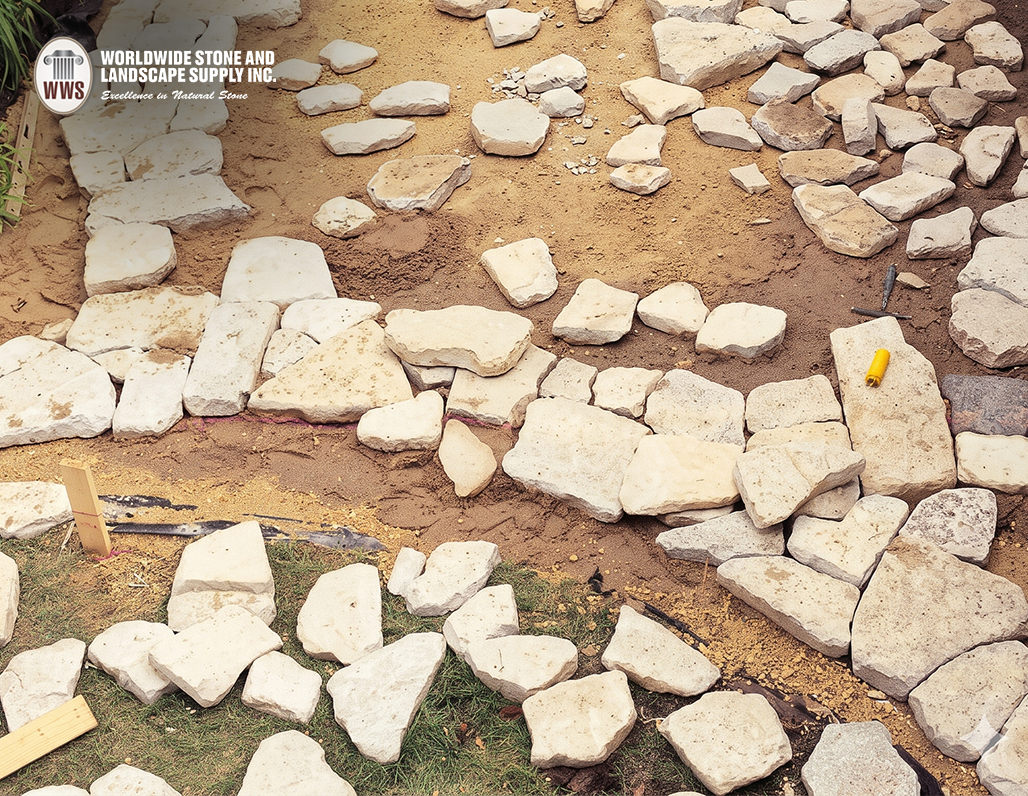
Dry-laid (flexible) | Compacted aggregate base and bedding layer | Moves slightly with frost and settling | Polymeric sand or joint sand |
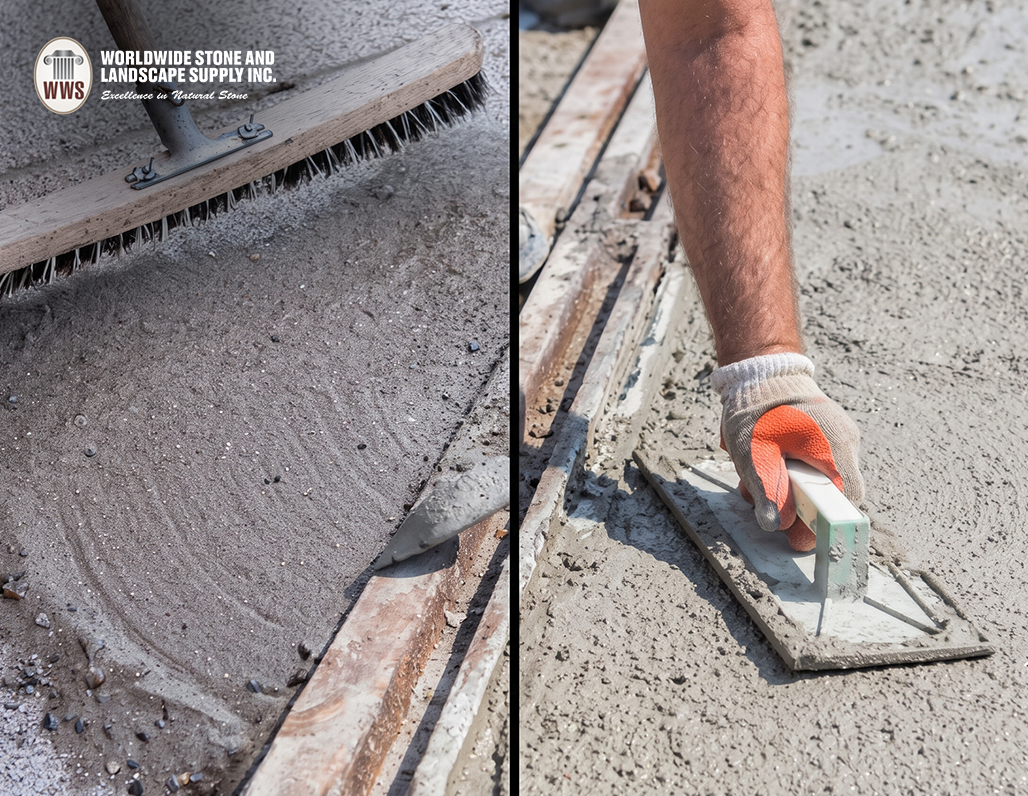
Wet-laid (rigid) | Reinforced concrete slab, stone bonded in mortar | Acts as one solid unit | Mortar or grout |
Putting mortar joints on a gravel base is one of the most common causes of cracked joints in Ontario. The base flexes, the mortar can’t, and the joint breaks.
What Is Polymeric Sand?
Polymeric sand is a fine sand blended with binders. Once swept into the joints and misted with water, it hardens into a firm joint that resists washout, weeds and insects while still allowing slight movement.
Advantages:
- Flexible enough for dry-laid patios on aggregate
- Resists weeds, ants and washout far better than plain sand
- DIY-friendly with basic tools
- Easier to repair than mortar; old joints can be removed and refilled
- Lower material and labour cost than a wet-laid installation
Drawbacks:
- Needs dry weather and above-freezing temperatures to install
- Can leave a haze on the stone if residue isn’t removed before watering
- Very wide flagstone joints need a product rated for that width
- Joints may need topping up after several years
Typical Product Limits
Every product is different, so always read the bag. As one example, Alliance Gator’s Gator Maxx Sand is listed for concrete pavers and natural stone with:
Requirement | Gator Maxx Sand example |
|---|---|
Joint width | 1/8 in. (3 mm) to 2 in. (5 cm) |
Minimum joint depth | 1 1/2 in. (38 mm) |
Temperature | Above 0°C (32°F) |
Dry time before rain | At least 1 hour for traditional installs |
Surface condition | Pavers and joints must be dry |
Also Read: Concrete vs Natural Stone Paving in Ontario
What Are Mortar Joints?
Mortar joints are made from a cement-based mix packed or poured between stones that are already bonded to a concrete slab. They set hard and create a smooth, finished look.
Advantages:
- Very solid, clean finish with no loose material
- No weeds or ants once cured
- Suits formal designs, steps and pool surrounds on concrete
- Doesn’t wash out
Drawbacks:
- Must have a sound, properly built concrete slab underneath
- Cracks if the base moves or the slab wasn’t built for frost
- Harder and more expensive to repair
- Cement residue can stain stone if not cleaned quickly
- Can contribute to white efflorescence deposits as moisture moves through it
Polymeric Sand vs Mortar Side by Side
Factor | Polymeric sand | Mortar |
|---|---|---|
Base needed | Compacted aggregate | Concrete slab |
Flexibility | Slightly flexible | Rigid |
Freeze-thaw tolerance | Good on a well-drained base | Good only with a frost-ready slab |
Look | Natural, sand-coloured joint | Smooth, crisp, finished joint |
Weed resistance | Good | Excellent |
Installation | Faster, DIY-friendly | Skilled trade work |
Cost | Lower | Higher (slab plus labour) |
Repairs | Simple: rake out and refill | Grind out and repoint |
Typical lifespan | Several years before top-ups | Long, if the slab stays sound |
When to Choose Polymeric Sand
Choose polymeric sand when:
- Your patio, walkway or pool deck is dry-laid on gravel
- You want a natural look and easier future repairs
- You’re building on natural ground without an existing slab
- Budget matters and you’d rather avoid pouring concrete
It works well with sawn pavers, tumbled stone and many flagstone patios, as long as joint widths stay within the product’s range. Our natural stone pavers are commonly dry-laid this way.
When to Choose Mortar
Choose mortar when:
- Stone is being bonded to an existing, sound concrete slab
- You’re building steps, landings or raised areas where a rigid structure is planned
- You want a very formal, clean finish
- The area is a front entrance or porch built over concrete
Steps are a good example. Natural stone landing steps set on a concrete structure are usually bedded and jointed in mortar for a solid, permanent finish.
Other Joint Options for Natural Stone
Polymeric sand and mortar aren’t the only choices, especially for informal designs:
Joint option | Look | Best for | Keep in mind |
|---|---|---|---|
Regular joint sand | Natural, soft | Tight joints, low budgets | Washes out and invites weeds |
Small gravel or pebbles | Textured, decorative | Wide flagstone joints, stepping stones | Needs edging to stay in place |
Planted joints | Green, garden-like | Cottage paths, low-traffic patios | Needs watering and trimming |
Permeable joint aggregate | Clean, open | Permeable designs | Requires a permeable base |
For decorative wide joints, natural river pebbles give flagstone paths a relaxed, natural finish.
How to Apply Polymeric Sand: Quick Steps
Follow the product’s own instructions first. The general process looks like this:
- Check the forecast. You need dry stone, dry joints and no rain for the time stated on the bag.
- Sweep the sand into the joints with a stiff broom.
- Compact it in using a plate compactor with a protective pad, if the stone and product allow, then refill joints.
- Set the level just below the stone’s surface, as the bag directs.
- Remove every trace of residue from the stone with a soft broom and leaf blower.
- Activate with a gentle shower setting in small sections, following the product’s watering steps.
- Keep foot traffic off until the joint has set.
Common Joint Mistakes to Avoid
- Mortar on a gravel base. The rigid joint cracks as the base moves.
- Polymeric sand on wet stone. It can harden on the surface and leave a haze.
- Joints too shallow. Thin joints break up quickly.
- Overwatering. Too much water washes binder out of the joint.
- Ignoring the temperature. Installing near freezing can stop the joint curing properly.
- Mixing methods. Combining a gravel base with a mortar bed causes uneven movement.
Also Read: How to Prevent Natural Stone From Cracking
Joint Care Through Ontario Seasons
- Spring: check joints after the thaw and top up any low spots.
- Summer: sweep regularly and pull any weeds while they’re small.
- Fall: remove wet leaves so they don’t stain stone or sit in joints.
- Winter: use a plastic shovel and go easy on de-icers, which are hard on both stone and joints.
Which Joint Suits Your Project?
Project | Usual base | Recommended joint |
|---|---|---|
Backyard patio on natural ground | Compacted aggregate | Polymeric sand |
Garden path or stepping stones | Compacted aggregate | Polymeric sand, gravel or planted joints |
Pool deck, dry-laid | Compacted aggregate | Polymeric sand rated for pool areas |
Pool deck over existing concrete | Concrete slab | Mortar or exterior grout |
Front porch or entrance over concrete | Concrete slab | Mortar |
Rustic flagstone with wide gaps | Compacted aggregate | Wide-joint polymeric sand or pebbles |
Rooftop or balcony | Pedestals | Open joints, no filler |
Cost and Value Over Time
Polymeric sand almost always costs less up front, because a dry-laid patio doesn’t need a concrete slab. It also keeps repair costs low: a lifted or stained stone can be taken out, reset and rejointed in an afternoon.
Mortar costs more to install, but on the right base it can give a long-lasting, low-maintenance finish. The risk is that if the slab cracks, repairs mean grinding out joints and sometimes resetting stones, which is far more work.
For most Ontario backyard patios built on natural ground, polymeric sand on a well-built aggregate base offers the best balance of cost, appearance and easy repairs. Mortar earns its place on concrete porches, formal entrances and structures designed to be rigid from the start.
Plan Your Stone and Joints Together
The best joint is chosen at the same time as the stone and the base. Contact our team to talk through your project, and we’ll help you choose stone sizes, finishes and an installation method that suit how you’ll use the space.
Frequently Asked Questions
Is polymeric sand or mortar better for a stone patio?
It depends on the base. Polymeric sand suits stone laid on compacted gravel; mortar suits stone bonded to a concrete slab.
Can I use mortar joints on a gravel base?
It’s not recommended. Gravel bases flex with frost and settling, and rigid mortar joints usually crack.
Can polymeric sand be used with flagstone?
Yes, if the joint widths are within the product’s rated range. Very wide flagstone joints need a product designed for wide joints.
How long does polymeric sand last?
Many polymeric sand joints last several years before needing top-ups, depending on traffic, drainage and installation quality.
Why is my polymeric sand leaving a haze?
Haze usually comes from residue left on the stone or applying the sand when the stone was damp. Follow the product’s cleaning advice.
How wide can polymeric sand joints be?
It depends on the product. For example, Gator Maxx Sand is listed for joints from 1/8 inch up to 2 inches.
Can I install polymeric sand in cold weather?
Most products need temperatures above freezing and dry conditions. Check the bag before you start.
Do mortar joints stop weeds completely?
Sound mortar joints stop nearly all weeds. Cracked joints can let weeds and water back in, so repair cracks early.