Bigger stone sounds like a simpler job. Fewer pieces, fewer joints, faster install. Only half of that is true. Jumbo slabs do give a patio a clean, modern look with far fewer joints, and the result can feel like one continuous floor running out from your back door. But each piece is heavy, unforgiving of a bumpy base, and awkward to move by hand. The size that makes them beautiful also changes how you plan, lift and lay them. This guide covers the sizes and thicknesses to look for, where jumbo slabs work best, and how to install them so they stay flat. For the design case behind them, see the top 5 reasons architects choose jumbo stone slabs.
What Counts as a Jumbo Slab?
A jumbo slab is a large format stone paver, much bigger than the standard patio pieces most people picture. Where a typical paver is easy to carry in two hands, a jumbo slab usually needs two people or a lifting aid. In outdoor landscaping, jumbo slabs are used for patios, walkways, outdoor kitchen floors, stepping stones and steps.
There is no single industry definition of “jumbo”. Each supplier sets its own size range, so it pays to look at actual dimensions rather than the label. Our jumbo stone slabs in Ontario list the sizes, stones and finishes we carry.
Common Jumbo Slab Sizes and Thicknesses
Jumbo slabs are usually rectangular, with a long side well beyond a standard paver. Larger sizes reduce joints but increase weight per piece, so the right choice balances look against access and handling on your site.
Size | Thickness | Typical use |
[FILL: size] | [FILL: thickness] | Patios and walkways |
[FILL: size] | [FILL: thickness] | Patios and walkways |
[FILL: size] | [FILL: thickness] | Driveways, steps, outdoor kitchens |
[FILL: size] | [FILL: thickness] | Driveways, steps, outdoor kitchens |
Sizes for Patios and Walkways
For foot traffic, a standard jumbo slab thickness is enough when it sits on a well-built base. Consider how a slab size divides into your patio dimensions: fewer cuts means less waste and cleaner lines. On narrow walkways, a slab that spans the full width gives a striking, bridge-like look.
Thicker Slabs for Driveways and Steps
Vehicle loads and unsupported spans need more strength. Driveways, steps and anything that overhangs call for thicker slabs, and often a concrete base. Ask your installer to confirm the thickness for your use before ordering.
Jumbo Slabs vs Standard Pavers
Factor | Jumbo Slabs | Standard Pavers |
Number of joints | Few; long, clean lines | Many; joint pattern is part of the look |
Look | Modern, minimal, continuous | Flexible: classic, rustic or patterned |
Weight per piece | Heavy; usually needs lifting equipment | Manageable by hand |
Installation time | Fewer pieces, but each needs careful placement | More pieces, but each is quick to set |
Cost factors | Higher per piece; extra handling and equipment | Lower per piece; more labour on layout and cuts |
Standard natural stone pavers still suit curved designs, tight spaces and patterned layouts. Many projects combine both, with jumbo slabs as the main field and smaller pavers for borders or curves.
Where Jumbo Slabs Work Best
Jumbo slabs reward simple, generous spaces, where their size can be seen and appreciated.
Modern Patios
A jumbo slab patio is the clearest use. Long, straight joints line up with modern architecture, large windows and sliding doors, so the patio reads as an extension of the floor inside. Fewer joints also mean less weeding and easier sweeping. Rectangular layouts work best; heavy curves need many cuts and waste much of the slab’s appeal.
Outdoor Kitchens and BBQ Areas
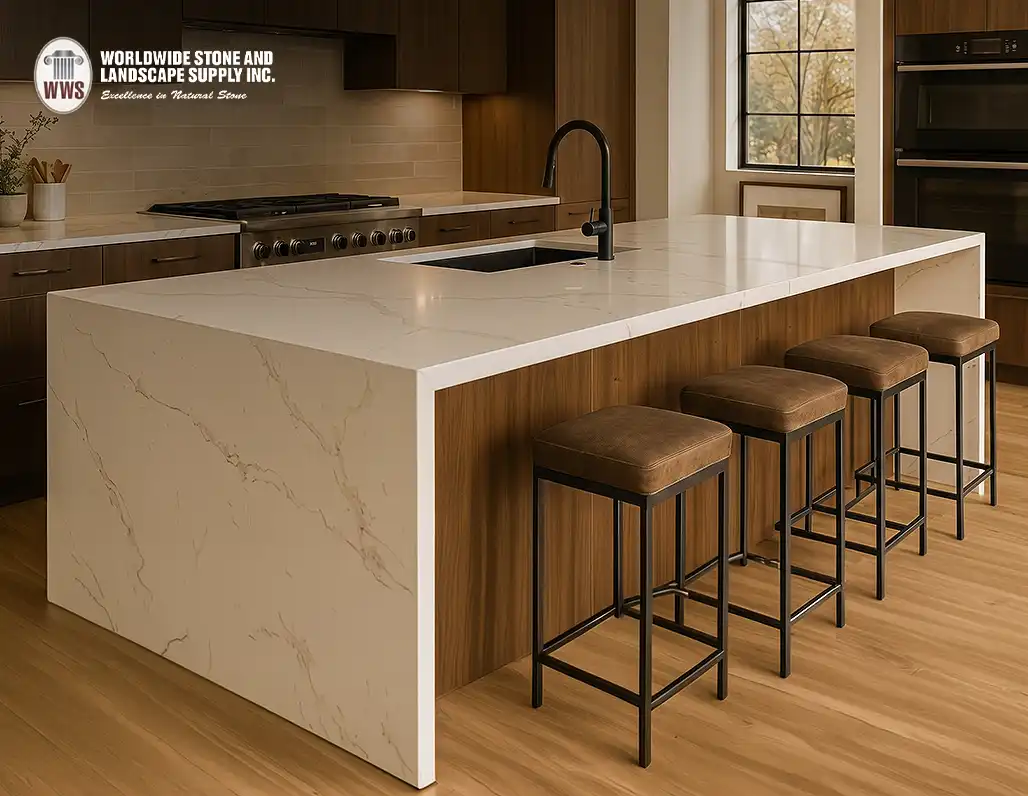
Jumbo slabs for outdoor kitchens give a smooth, near-seamless floor that is easy to clean when grease or sauce spills. Wide slabs also make sturdy counters and bar tops. Plan the layout so joints fall away from the cooking zone. If you are adding a natural stone fire pit nearby, our natural stone fire pit guide covers safe placement on a stone surface.
Stepping-Stone Paths and Floating Steps
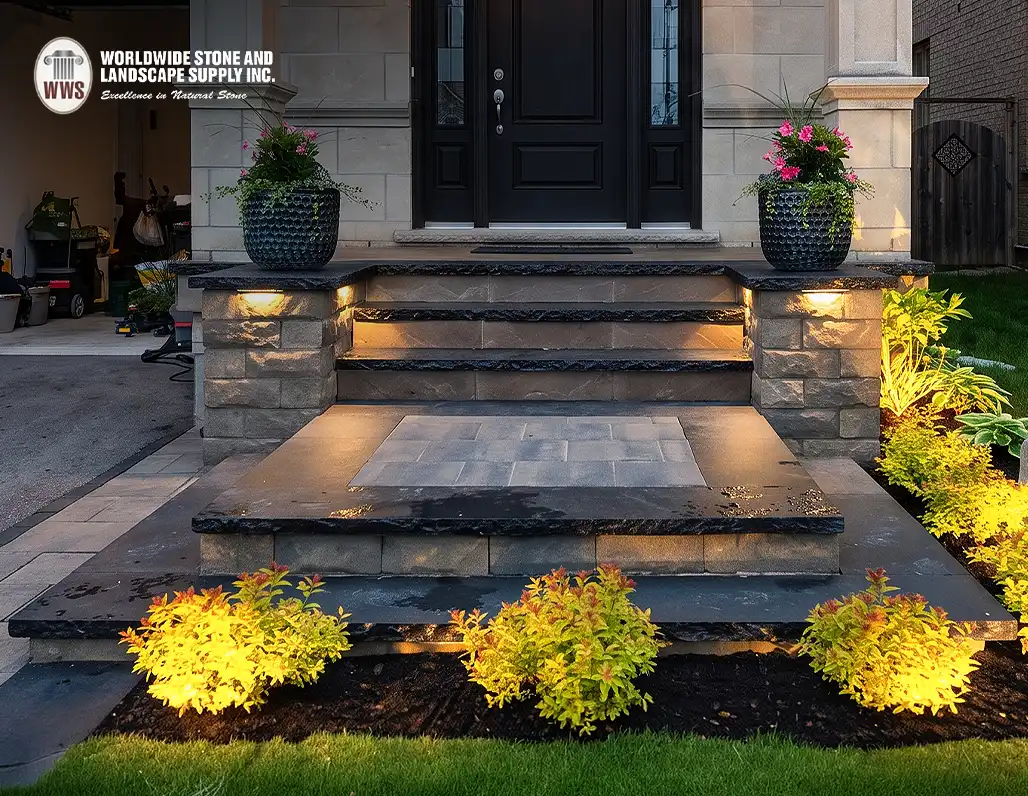
Single slabs set in lawn or gravel make bold stepping-stone paths. Thicker slabs, cantilevered over a hidden support, create floating steps that seem to hover. For finished pieces made to this purpose, see our natural stone landing steps.
Base Preparation for Large Slabs in Ontario
A large slab bridges over the base beneath it. If one spot is high, the slab rocks; if one spot is soft, it can crack under load. That makes the base more critical with jumbo slabs than with any other paver.
Strip out topsoil and any soft ground, then build a well-graded granular base, compacting it in thin layers. Screed the bedding layer flat and true, because small dips that a standard paver would hide will show on a jumbo slab. Build in a gentle slope away from the house so water never sits under or on the stone. In Ontario, drainage is the real defence against frost heave. Our freeze-thaw survival guide explains which stones and bases hold up best.
Also Read: Freeze-Thaw Survival Guide: Best Natural Stones for Patios, Driveways & Retaining Walls in Ontario
Handling and Lifting Heavy Slabs Safely
Jumbo slabs are heavy and can snap if lifted unevenly or dropped on a corner.
Do:
- Use a vacuum lifter, slab clamps or a slab cart for moving and placing.
- Carry slabs on edge where possible, which reduces flex.
- Plan the delivery route, with firm, level access from the drop point to the patio.
- Lower each slab straight down onto the bed rather than sliding it.
Don’t:
- Lift alone or by one corner.
- Store slabs flat on uneven ground, where they can crack.
- Walk across freshly laid slabs before they settle.
For other common installation pitfalls, see our 5 mistakes to avoid when installing natural stone pavers.
Dry-Lay vs Wet-Lay for Jumbo Slabs
Dry-lay sets slabs on a compacted base and a screeded bedding layer, with jointing material between them. It allows water to drain through, flexes slightly with ground movement, and makes individual slabs easier to lift for repairs.
Wet-lay sets slabs on a mortar bed over a concrete slab. It creates a rigid, very stable surface that suits outdoor kitchens, steps and anywhere slabs overhang or carry heavy loads. It depends on good drainage and expansion joints, since trapped water and movement can crack a rigid system.
Choose dry-lay for most patios and walkways. Choose wet-lay for kitchens, steps, overhangs and installs over existing concrete. Your installer should confirm the method for your site.
Also Read: Quartz Slab Sizes: Regular vs Jumbo vs Super Jumbo
Choosing the Stone and Colour
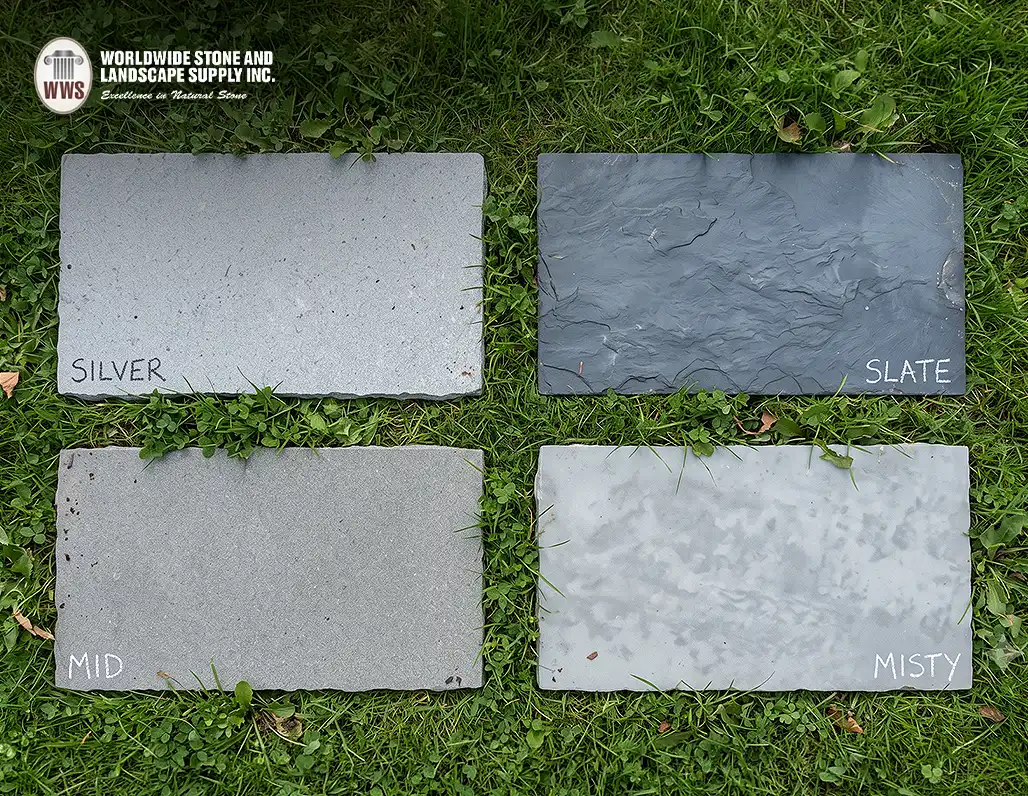
Large format stone pavers show off the stone itself, so colour and veining matter more than with small pavers. Light, even greys give a calm, contemporary look; our Silver Grey patio design shows how a pale slab brightens a backyard. Dark stones such as Kota Black natural stone make a dramatic statement and pair well with light walls and planting.
Think about finish as well as colour. Textured finishes such as flamed or sandblasted improve grip around pools and outdoor kitchens, while honed surfaces suit covered areas. Darker stones also absorb more summer heat, so lighter slabs are kinder underfoot in full sun.
What Affects the Cost of a Jumbo Slab Patio?
Several factors shape the total. The stone, thickness and finish set the material price. Larger slabs cost more per piece, and thicker slabs cost more per square foot. Site access matters: narrow side yards or steps may require hand equipment or a crane-style lift, adding labour. Base preparation is often deeper and more precise than for standard pavers. Layout affects waste, since curves and odd shapes mean more cutting. Finally, wet-lay installations add a concrete slab to the budget. A rough sketch with measurements and access photos helps your supplier and installer quote accurately.
Plan Your Jumbo Slab Project With Worldwide Stone
Jumbo slabs are easiest to judge at full size. Compare stones, finishes and sizes from our jumbo stone slabs in Ontario, then visit our Caledon yard to plan quantities and delivery.
Frequently Asked Questions
What size is a jumbo stone slab?
Jumbo slabs are much larger than standard pavers. Exact sizes vary by stone and supplier, so check the sizes currently in stock before you plan your layout.
How thick should jumbo slabs be?
It depends on the use. Driveways, steps and overhanging pieces need thicker slabs than patios and walkways that only carry foot traffic.
Do jumbo slabs need special installation?
Yes. They need a well-compacted, very level base and usually lifting equipment such as a vacuum lifter to place them without damage.
Are jumbo slabs good for outdoor kitchens?
Yes. Fewer joints make the surface easier to clean and give a seamless look. Wet-laying on concrete adds stability under heavy appliances.
Are jumbo slabs more expensive than regular pavers?
Each slab costs more, and handling can add labour. The final total depends on the stone, layout, base work and site access.
Can jumbo slabs crack in winter?
A properly prepared base and good drainage greatly reduce the risk. Most cracking comes from a base that shifts or heaves with frost.
Can jumbo slabs be used as steps?
Yes. Thicker slabs make striking floating steps and landing steps, especially in modern designs.