Stand in front of two stone walls and you will feel the difference before you can name it. One looks tailored, almost architectural. The other looks like it has stood there for a century. Both are real stone, and both give a wall depth and texture that paint or siding cannot match. The style you pick shapes how your whole home reads, from the curb or across the living room, and it is part of the bigger question of whether natural stone adds value to your home. So which one suits your walls? It is one of the questions we hear most at our Caledon stone yard.
What Is Natural Stone Wall Cladding?
Natural stone wall cladding is a layer of thin, real stone fixed to the face of a wall. It does not hold anything up. The wall behind it carries the load, while the stone provides the finish. Pieces are cut or split thin enough to be adhered to concrete, block, or a properly prepared framed wall, so you get the appearance of solid masonry without building a full stone wall. You will also see it sold as stone veneer, and the two terms describe the same idea. Ledgestone and fieldstone are two of the most requested styles, and they sit at opposite ends of the design spectrum.
What Is Ledgestone Cladding?
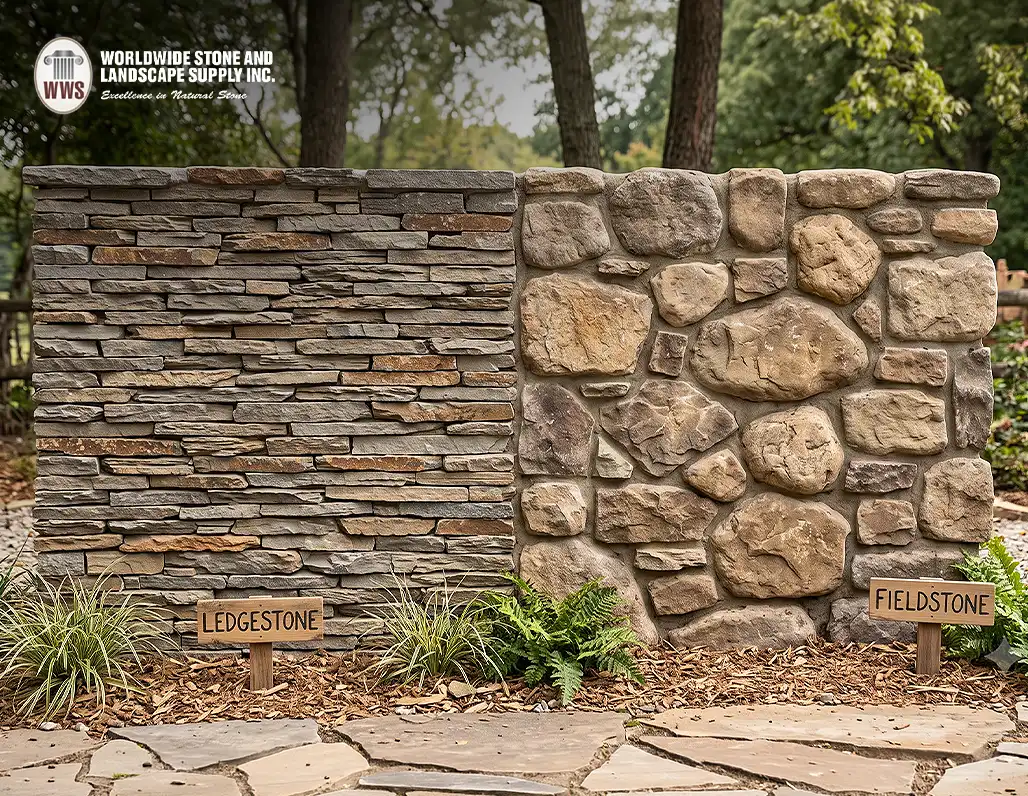
Ledgestone is made from thin, rectangular strips of natural stone laid in horizontal courses. Many products come as interlocking panels with matching corner pieces, which keeps the pattern consistent across large areas. Browse our ledgestone wall cladding in Ontario for colours and textures.
The Look: Stacked, Linear and Modern
Long, narrow pieces sit tight together with little or no visible mortar. The stacked edges create crisp horizontal shadow lines that carry the eye across the wall. That is why it is the usual choice for a stacked stone feature wall.
Where Ledgestone Works Best
It suits modern and transitional homes, floor-to-ceiling fireplaces, TV walls, basement accent walls, entry columns, and commercial lobbies where clean lines matter.
What Is Fieldstone Cladding?
Fieldstone recreates the look of stones gathered from open farmland: rounded and angular pieces of different sizes fitted together by hand. Our fieldstone veneer brings that heritage character to new and existing walls.
The Look: Irregular, Rustic and Organic
No two pieces match. Shapes, sizes and tones shift across the wall, and the mortar joints become part of the design. Joints can be raked back for deep shadows or brushed nearly flush for an old-world finish. This is classic rustic stone veneer.
Where Fieldstone Works Best
Fieldstone feels at home on farmhouses, cottages, craftsman and traditional houses, rural properties, chimneys, foundation skirts, and garden walls that should look as if they have always been part of the landscape.
Ledgestone vs Fieldstone: A Side-by-Side Comparison
Here is how the two styles stack up on the points that usually decide the choice.
Feature | Ledgestone | Fieldstone |
Style | Clean, contemporary, linear | Rustic, organic, traditional |
Stone shape | Thin rectangular strips, often in panels | Irregular rounded and angular pieces |
Joint look | Tight, dry-stacked appearance with minimal visible mortar | Visible mortar joints that form part of the pattern |
Installation speed | Usually faster, since uniform pieces and panels go up in rows | Slower, since each piece is selected and fitted by hand |
Best-matching architecture | Modern, transitional, minimalist, commercial | Farmhouse, cottage, craftsman, heritage, country |
Typical uses | Feature walls, fireplaces, columns, modern facades | Chimneys, foundations, garden walls, rustic exteriors |
Neither style is better in absolute terms. A quick test helps: look at the lines already on your home. Crisp window frames, flat rooflines and sharp trim tend to pair with ledgestone. Timber beams, gables and a rural setting tend to pair with fieldstone. If you are still torn, our natural stone gallery shows both styles on finished homes.
Also Read: Why Natural Stone is the Perfect Choice for Modern Landscaping
Interior vs Exterior Uses
Both styles work inside and outside. The difference is how each one behaves in a given space.
Feature Walls and Fireplaces
Indoors, ledgestone dominates. Its flat profile keeps a feature wall from feeling bulky, and its horizontal lines make fireplace stone cladding look taller and more dramatic. Fieldstone indoors makes a strong statement, ideal for a great room, cottage or lodge-style basement where you want warmth and a little weight.
House Exteriors, Columns and Garden Walls
Outside, the choice comes down to architecture. As stone veneer for exterior walls, ledgestone gives a modern facade sharp definition and wraps columns neatly. Fieldstone softens a home’s base, blends into gardens, and gives retaining or freestanding garden walls a weathered, settled look from day one.
How Each Style Handles Ontario Winters
Freeze-thaw cycles do not care whether a wall is ledgestone or fieldstone. What matters is the stone itself and how water is managed. Dense, low-absorption stone holds up far better than porous stone, so ask about the material, not just the style. The bigger risk is water trapped behind the cladding, which freezes, expands and can loosen pieces over time. Exterior walls need a proper moisture barrier and a way for water to drain out. Fieldstone relies on sound mortar joints, so cracked joints should be repaired promptly. For a deeper look, read our guide to natural stone for the Canadian climate.
Also Read: Freeze-Thaw Survival Guide: Best Natural Stones for Patios, Driveways & Retaining Walls in Ontario
Installation Basics to Discuss With Your Contractor
Bring these questions to your first site visit:
- Can the wall carry the weight? Real stone is heavy, so the substrate needs checking first.
- What moisture protection goes behind the stone? Exterior installs need a barrier and drainage plan.
- Which mortar or adhesive will you use? It should be rated for natural stone veneer and for the location.
- How will you handle corners? Matching corner pieces make ledgestone look solid rather than applied.
- Will you dry-lay fieldstone first? Laying pieces out before setting them produces a more balanced pattern.
- Do I need a permit? Local rules vary, so confirm before work begins.
What Affects the Cost of Stone Cladding?
Several factors shape the final price. The stone type, thickness and finish set the material cost. Style affects labour: ledgestone panels typically go up faster, while fieldstone takes longer to fit by hand. Wall area and the number of corners matter, since corner pieces usually cost more than flat pieces. Substrate preparation can add work on older walls. Height and access play a part, with scaffolding needed for chimneys and two-storey facades. Finally, finishing details such as coping, pier caps and sealer add to the total. Bring rough measurements and photos to get an accurate quote.
Finishing the Wall: Pairing Cladding With Coping and Pier Caps
Cladding covers the face of a wall, but the top edge needs protection too. Natural stone wall coping caps freestanding and garden walls, shedding rain and snowmelt away from the joints below and giving the wall a finished edge. On columns and gate posts, natural stone pier caps do the same job. Matching the colour of your coping to your cladding creates a seamless look, while a contrasting tone frames the stone like a border. Our natural stone wall coping guide covers profiles and sizing.
See Ledgestone and Fieldstone Samples at Worldwide Stone
Photos only go so far. Stone changes with daylight, and texture is easier to judge by hand. Compare our ledgestone wall cladding in Ontario and fieldstone veneer side by side, then visit our stone yard in Caledon to see full pieces before you decide.
FAQ's
What is the main difference between ledgestone and fieldstone?
Ledgestone uses thin, rectangular pieces stacked in tight rows for clean, modern lines. Fieldstone uses irregular, natural shapes set with visible mortar joints for a rustic, organic look.
Can natural stone cladding be used outdoors in Ontario?
Yes. Natural stone handles Ontario weather well when it is installed over a suitable substrate with proper moisture management and a mortar rated for exterior use. Dense, low-absorption stone adds extra freeze-thaw protection.
Which is easier to install, ledgestone or fieldstone?
Ledgestone is usually quicker because its pieces are uniform and often come in panels that go up row by row. Fieldstone takes more time, since each irregular piece has to be selected and fitted by hand.
Is stone cladding the same as stone veneer?
Largely, yes. Both terms describe thin natural stone applied to the face of a wall rather than structural stone that carries a load.
Can stone cladding go over an existing wall?
Often, yes, provided the wall can carry the added weight and has a sound surface. Your installer should inspect the substrate first and recommend any preparation needed.
Is stone cladding safe around a fireplace?
Natural stone does not burn, which makes it a popular fireplace surround. Always follow the fireplace manufacturer’s clearance requirements for the surrounding wall and any framing behind the stone.
Does stone cladding need sealing?
It depends on the stone and where it is installed. Many exterior walls benefit from a breathable sealer that repels water while letting moisture escape. Many interior walls need none.