What is the first part of a pool your hand grabs when you climb out? The coping. It is also the first thing guests see, the edge kids sit on, and the line that frames the whole backyard. Pick the wrong profile and a beautiful pool can look thin, or feel harsh under bare legs. Rebate and bullnose are two of the most popular choices for natural stone coping, yet few homeowners know what “rebate” even means. This guide explains both, side by side, so you can choose the edge that fits how your family uses the space.
What Is Coping and Why the Edge Profile Matters
Coping is the stone that caps the top of a pool wall, garden wall or step. It protects the structure below from water, gives a safe surface to walk and sit on, and finishes the edge visually. If you are new to the topic, start with our explainer on what is stone coping.
The edge profile is the shape of the front face, and it does more work than people expect. It decides how thick the stone looks from across the yard, how it feels against skin, how it catches light and shadow, and whether the design reads crisp and modern or soft and classic. Same stone, different profile, very different result.
What Is Rebate Coping?
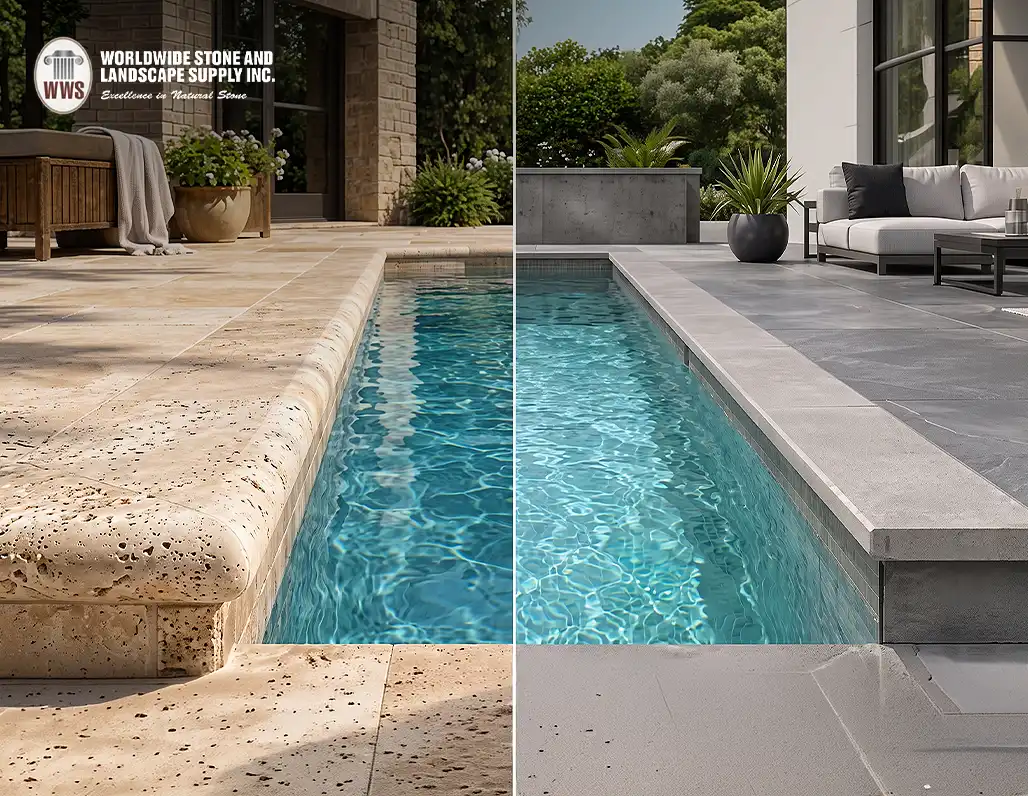
Quick answer: Rebate coping has a thickened, stepped front edge. The face drops down below the top surface, so a standard paver looks like a much heavier slab of stone from the side.
Rebate coping is also sold as drop face coping, and you will see rebated pool coping used to describe the same profile on pool edges. See our rebate coping stone in Ontario for current stones and sizes.
How the Rebated (Drop-Face) Edge Is Made
The fabricator leaves extra depth along the front of the stone, creating an L-shaped profile. The underside behind that front lip is cut back, or rebated, so the coping still sits flat on the wall or bond beam. From above you see a normal coping width. From the side you see a deep, solid-looking face.
Best Uses: Pools, Raised Walls and Step Edges
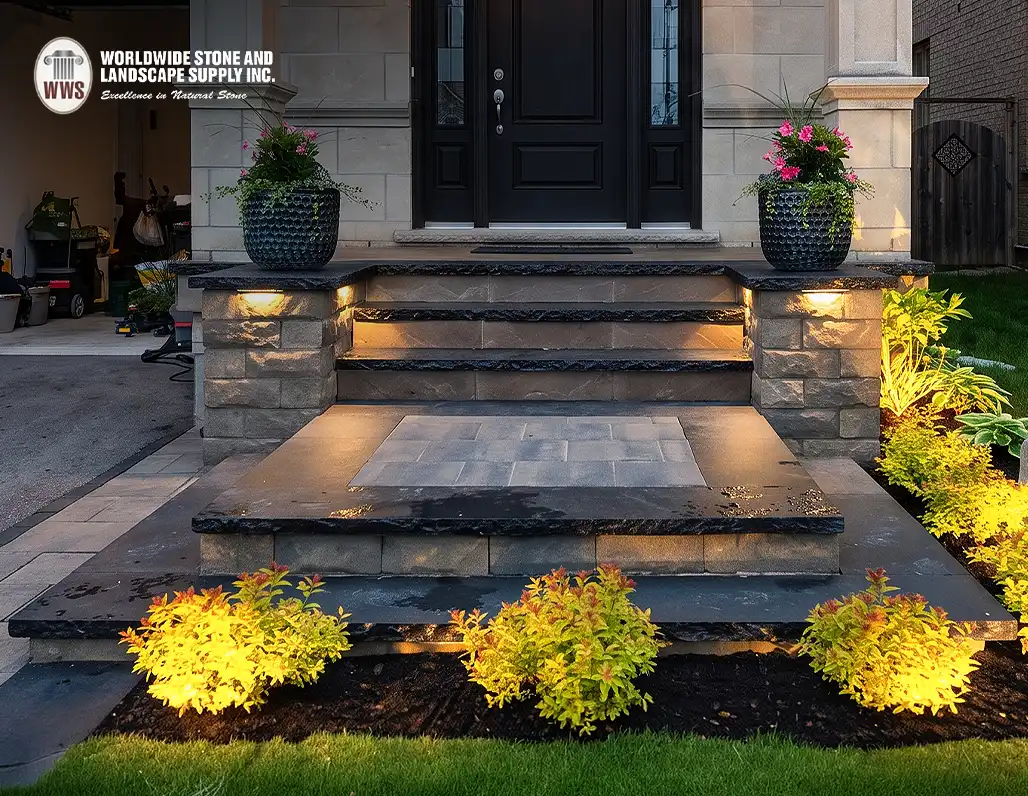
Rebate coping shines on contemporary pools, where the deep face overhangs the water in a strong, straight line. It also suits raised planters and seat walls, pairing well with stone wall coping on the runs between. On stairs, the drop face gives each tread a chunky nosing, a look that fits the designs in our steps, risers and landing steps guide.
What Is Bullnose Coping?
Bullnose coping has a fully rounded front edge, curving from the top surface down to the face. Explore our bullnose coping range for stones and finishes.
The Rounded Edge Explained
The edge is ground into a smooth half-round, so there is no sharp corner anywhere along the front. Light rolls over the curve instead of breaking on a crisp line, which gives the edge a soft, finished look.
Best Uses: Family Pools and High-Traffic Edges
That gentle curve makes bullnose pool coping a favourite for family pools, step edges that see bare feet, and anywhere people sit or lean. For a deeper look at rounded profiles, read bullnose vs eased edge pool copings.
Rebate vs Bullnose: A Side-by-Side Comparison
Factor | Rebate Coping | Bullnose Coping |
Look | Bold, architectural, linear | Soft, classic, rounded |
Edge feel | Defined corner (often lightly arrised) | Smooth curve with no sharp corner |
Safety | Good with an arrised edge; firmer contact | Gentlest on skin for sitting and climbing out |
Visual thickness | Looks much thicker than it is | Reads as the true stone thickness |
Installation | Rebate must sit correctly on the wall; needs careful alignment of the deep face | Simple bedding; curve is forgiving of tiny height differences |
Best design style | Modern, minimalist, contemporary | Traditional, transitional, family-focused |
Which Profile Suits Modern vs Traditional Designs?
Look at the lines already in your backyard. Flat-roofed homes, large-format porcelain patios, black window frames and geometric planting all point toward rebate coping. Its deep, square face echoes those straight lines and makes the pool edge feel like a deliberate architectural band.
Brick homes, curved pool shapes, cottage gardens and classic flagstone patios lean toward bullnose. The rounded profile follows curves gracefully and softens the transition between water and deck. Transitional homes can go either way, so let the pool shape decide: freeform pools usually look better with bullnose, while rectangular pools show off a rebated edge.
Safety and Comfort Around Pools
Pool coping is touched more than any other stone in the yard. Swimmers grip it, kids sit on it, and wet feet cross it all summer. Bullnose has the advantage here because there is no corner to bump knees or scrape forearms against.
Rebate coping can still be comfortable. Ask for a lightly arrised (softened) top corner rather than a razor-sharp one. Whichever profile you pick, slip resistance matters more than shape, so choose a textured finish such as flamed, brushed or sandblasted for wet areas, and avoid polished surfaces on pool decks.
Also Read: Bullnose vs. Eased Edge Pool Copings: Which to Choose?
How Both Profiles Perform in Ontario’s Freeze-Thaw Cycles
The profile itself has little effect on winter durability. The stone, the installation and the drainage do. Dense, low-absorption stone resists freeze-thaw damage best, and a properly sloped coping sheds water away from the pool rather than letting it pool on top.
With rebate coping, the joint behind the drop face should be well bedded so water cannot collect inside the rebate and freeze. With bullnose, keep joints sealed and in good repair so meltwater does not reach the bond beam. Close your pool properly each fall, and inspect the coping each spring for open joints.
Choosing the Stone: Granite, Limestone or Sandstone
Both profiles can be cut from most coping stones, but each stone brings its own character. Granite is very dense and hard-wearing, and it holds a crisp rebated edge beautifully. Limestone offers a refined, even tone that suits both profiles and stays comfortable underfoot. Sandstone gives warm, natural colour variation and a textured surface with good grip.
Your choice should weigh climate, pool chemistry, colour and budget. For a full breakdown, see granite vs travertine vs limestone pool coping in Ontario winters.
Also Read: Best Natural Stone Flooring Options for High-Traffic Areas in Ontario
Installation Tips for Clean, Level Coping Lines
A great profile still looks poor if the line wanders. Go over these points with your installer:
- Set a consistent overhang. The front edge should project the same distance over the pool or wall all the way around.
- Check the rebate fit. The rebated underside must sit fully on the wall, with the drop face hanging plumb.
- Mitre or use dedicated corners. Pre-cut pool corner stones keep the profile continuous where edges meet.
- Slope away from the water. A slight fall keeps deck water out of the pool.
- Leave room for expansion. Joints between coping and deck allow for seasonal movement.
- Dry-lay first. Laying the run out before bedding catches colour and size variation early.
Find the Right Coping Profile at Worldwide Stone
Edges are hard to judge from a screen. Run your hand along each profile at our yard, compare our rebate coping stone in Ontario with bullnose in the same stone, and leave with a quote for both.
Frequently Asked Questions
What is rebate coping?
Rebate coping is stone coping with a stepped, thickened front edge. The face drops below the top surface, giving the look of a much thicker stone while the piece itself stays manageable in weight.
Is rebate coping good for pools?
Yes. It creates a bold, modern edge and can overhang the pool wall neatly. Ask for a lightly softened top corner if swimmers will be sitting on the edge often.
Is bullnose coping safer than rebate coping?
Bullnose has a fully rounded edge that is gentler on skin, which is why many families choose it for pools. Slip resistance depends more on the surface finish than the edge shape.
Which costs more, rebate or bullnose coping?
It depends on the stone, size and fabrication. The fairest comparison is a quote on both profiles in the same stone and the same quantity.
Can rebate coping be used on steps or walls?
Yes. The deep drop face works well on raised garden walls, seat walls and step edges, where it adds a strong, chunky nosing.
Can I mix coping profiles in one project?
Yes. A common combination is bullnose around the pool for comfort, with rebate coping on a nearby raised wall for a sharper architectural line.
Does natural stone pool coping need sealing?
Sealing is recommended, especially around salt-water pools, to reduce staining and moisture absorption. Your supplier can suggest a sealer suited to the stone.