Most Ontario patios empty out by late September. A fire pit fills them back up. It turns a summer-only space into somewhere you gather on crisp October nights, during early spring thaws, and even on clear winter evenings with a thermos in hand. But a fire pit lives a hard life: intense heat in the centre, freezing water on the outside, and both in the same week. The stone you choose decides whether it still looks good in ten years or starts cracking after two. This guide covers the right stones, sizes, placement and care, with ideas drawn from our list of 7 best natural stone project ideas for outdoor spaces.
Why Choose Natural Stone for a Fire Pit?
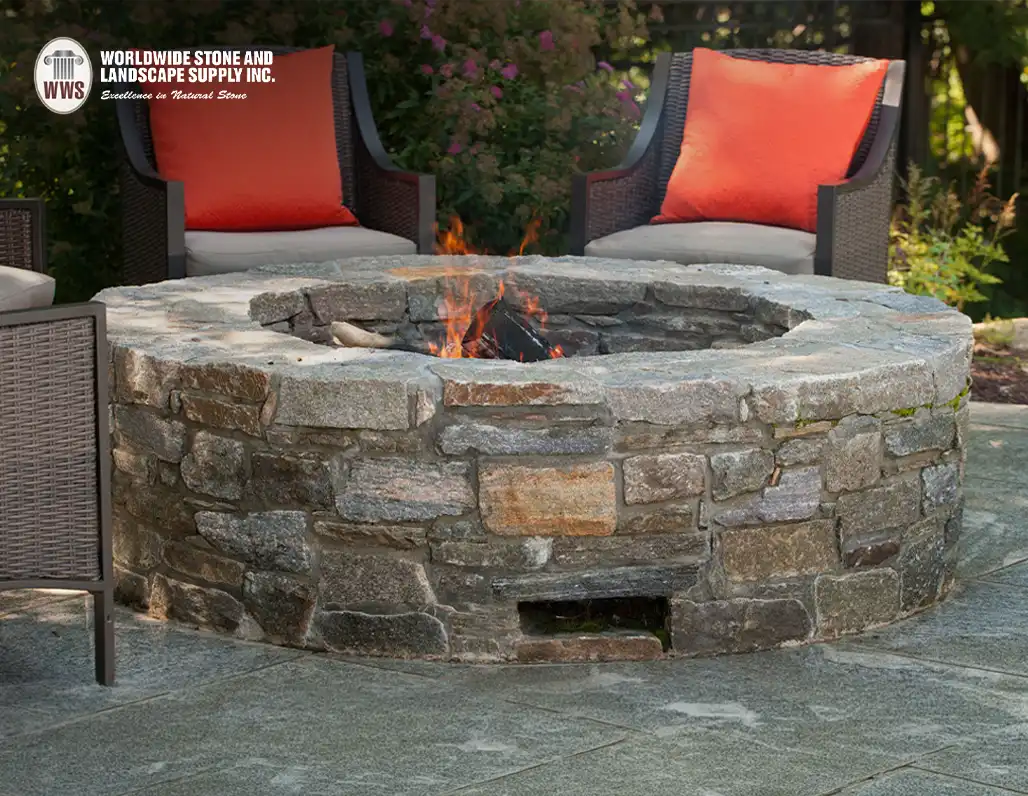
Natural stone is non-combustible, it holds and radiates warmth after the flames die down, and it weathers into the landscape instead of fading like painted metal or coloured concrete. A stone fire pit also feels permanent. It anchors a patio the way a fireplace anchors a living room, and it can be built to match the paving, walls and steps around it so the whole yard reads as one design.
Stone also gives you choice. You can go sleek and dark with a honed finish, or warm and rustic with split faces. Browse our natural stone fire pits in Ontario to see finished options.
Also Read: Does Natural Stone Add Value to Your Home?
Best Natural Stones for Fire Pits
The best stone for fire pit walls is dense, low in absorbed moisture, and paired with a proper liner. No natural stone should take direct, repeated flame on its own: a steel ring or firebrick lining the burn area protects the stone and extends its life.
Granite
Granite is the top performer. It is very dense, absorbs little water, and copes well with both heat and frost. It suits modern designs and takes flamed or honed finishes that resist scorch marks.
Sandstone
Sandstone brings warm colour and natural texture. Choose a dense, good-quality grade for the outer walls and cap, and keep it clear of direct flame with a liner, since more porous sandstones can spall under high heat.
Limestone
Limestone gives a refined, even tone. Dark, fine-grained Indian limestone such as Kota is popular for crisp, contemporary pits; see our Kota Black fire pit project for one finished example.
Stones to Keep Out of the Flames
Avoid river rock and loose pebbles inside the burn area. Water trapped in rounded stones can turn to steam and crack them. Use natural river pebbles around the pit instead, where they look great and stay safe.
Also Read: A Guide to Selecting the Perfect Natural Stone Flooring
Round vs Square Fire Pits: Which Shape Suits Your Patio?
Round fire pits are the classic choice. Everyone sits the same distance from the fire, conversation flows easily, and a circle softens a yard full of straight fences and rectangular slabs. Round pits suit curved seating walls, lawns, and informal gatherings.
Square and rectangular pits look architectural. They line up with rectangular pavers, modern homes and built-in benches, and a long linear pit can stretch along a seating wall for larger groups. They also align more naturally with gas burner pans.
If your patio is mostly straight lines, square tends to look intentional. If it has curves or sits in a garden, round usually fits better. See both shapes in finished yards in our natural stone gallery.
How Big Should Your Fire Pit Be?
Many backyard fire pits measure about 90 to 120 cm (36 to 48 inches) across the outside, which suits four to six people. Smaller pits keep the fire manageable and the heat close; larger ones host bigger groups but need more space and more fuel.
Size the space around the pit as carefully as the pit itself. Leave enough room for chairs plus a clear walkway behind them, so nobody has to step close to the flames to get past. Wall height matters too: a pit around knee height lets people rest their feet near the warmth without leaning over the fire.
[FILL: Worldwide Stone’s stocked fire pit shapes and sizes, matching /products/fire-pit/.]
Where to Place Your Fire Pit Safely
Placement is the most important decision you will make, and in Ontario it is partly decided for you by local rules.
Distance From Your House, Trees and Fences
Set the fire pit on a non-combustible surface such as stone paving or a compacted gravel base, never on a wooden deck. Keep it well clear of your house, sheds, fences, hedges and overhanging branches, and think about prevailing wind so smoke and sparks drift away from windows and neighbours.
Minimum distances come from your municipality. In Caledon, for example, the Town requires a recreational fire to be contained in a non-combustible device on a non-combustible surface, at least 3 metres from nearby combustible materials, burning only clean, dry seasoned firewood. Treat any published minimum as a floor, not a target.
Checking Your Municipality’s Open-Air Burning Rules
Rules vary widely across Ontario. Caledon issues recreational burn permits for most residential lots that meet its distance rules. Toronto, by contrast, does not permit wood-fuelled backyard fire pits, allowing only natural gas or propane decorative fire pits that meet provincial safety requirements. Before you build, call your local fire department, ask whether a permit is needed, and check for seasonal fire bans.
Wood-Burning vs Gas Fire Pits
Wood gives you the crackle, the smell and real radiant heat, and it suits rural and larger suburban lots where it is permitted. It also means smoke, ash cleanup, sparks, and a supply of dry firewood.
Gas, whether natural gas or propane, lights with a switch and shuts off instantly. There is no smoke or ash, and in cities that ban wood fires it may be your only legal option. A natural gas line must be run by a licensed gas fitter, and burners should be certified for outdoor use. The stone surround works the same way for both: a gas pit simply holds a burner pan instead of a firebrick-lined bowl.
Designing the Patio Around Your Fire Pit
The fire pit is the centrepiece, but the patio makes it usable. Lay a generous non-combustible zone around the pit with natural stone pavers, choosing a textured finish so the surface stays grippy when wet. For a seamless, modern look, large-format slabs reduce joints; our guide to jumbo slab sizes and installation explains the options.
Built-in seating walls turn a fire pit into an outdoor room. Cap them with stone wall coping for seating walls so the top is smooth and comfortable to sit on. Finish the edges with planting beds or decorative stone; our comparison of river pebbles vs gravel helps you pick the right border.
Protecting Your Fire Pit Through Ontario Winters
Ontario’s freeze-thaw cycles are tougher on a fire pit than the fire itself. Water that sits in the bowl soaks into joints and stone, freezes, expands, and slowly opens cracks.
Build drainage into the base, with a gravel layer or drain hole so the bowl never holds standing water. Clear ash after each use, since wet ash holds moisture against the stone. Once you stop using the pit for the season, cover it with a fitted, breathable cover or a non-combustible lid. Avoid dousing a hot pit with lots of cold water, because sudden temperature changes stress the stone. For more on cold-weather care, read how to prevent natural stone cracking in winter.
Simple Fire Pit Maintenance
A few habits keep a stone fire pit looking new:
After every fire: let it cool fully, then remove ash once cold.
Monthly in season: check the liner or firebrick for cracks and loose pieces.
Each spring: inspect mortar joints and cap stones, and repoint any open joints.
As needed: scrub soot from the cap with water and a stiff nylon brush; avoid harsh acids on limestone.
Every few years: reseal the outer stone and cap with a breathable sealer if your stone benefits from one.
Replace a worn steel ring or cracked firebrick promptly. It is far cheaper than repairing heat-damaged stone.
Build Your Fire Pit With Worldwide Stone
See the colours, finishes and sizes in person before you commit. Browse our natural stone fire pits in Ontario, then visit our Caledon stone yard to match your pit with pavers, coping and border stone for one cohesive backyard.
Frequently Asked Questions
What is the best natural stone for a fire pit?
Dense stones such as granite handle heat best. Whatever stone you choose, a steel insert or fire-rated liner should line the burn area so the stone never takes direct flame.
Do I need a steel ring or fire brick inside a stone fire pit?
It is strongly recommended. A steel ring or firebrick protects the stone from direct flame and rapid heating, which extends the life of your fire pit considerably.
How far should a fire pit be from my house?
It depends on local rules. Many Ontario municipalities set minimum distances from buildings and combustible materials, so check with your fire department before you build.
Do I need a permit for a backyard fire pit in Ontario?
Rules vary by municipality. Some require a recreational or open-air burning permit, and some ban wood-burning pits in the city entirely. Check with your local fire department.
Can I use river rocks inside a fire pit?
Avoid it. River rocks can trap moisture and crack when heated. Keep them for the surrounding landscape, where they add texture without the risk.
What size fire pit is best for a backyard?
Many backyard fire pits are about 90 to 120 cm (36 to 48 inches) across, which suits four to six people. Leave room around it for seating and a clear walkway.
Can a natural stone fire pit stay outside in winter?
Yes. Keep the drainage clear, remove ash, and cover the pit so water does not sit in the bowl and freeze.