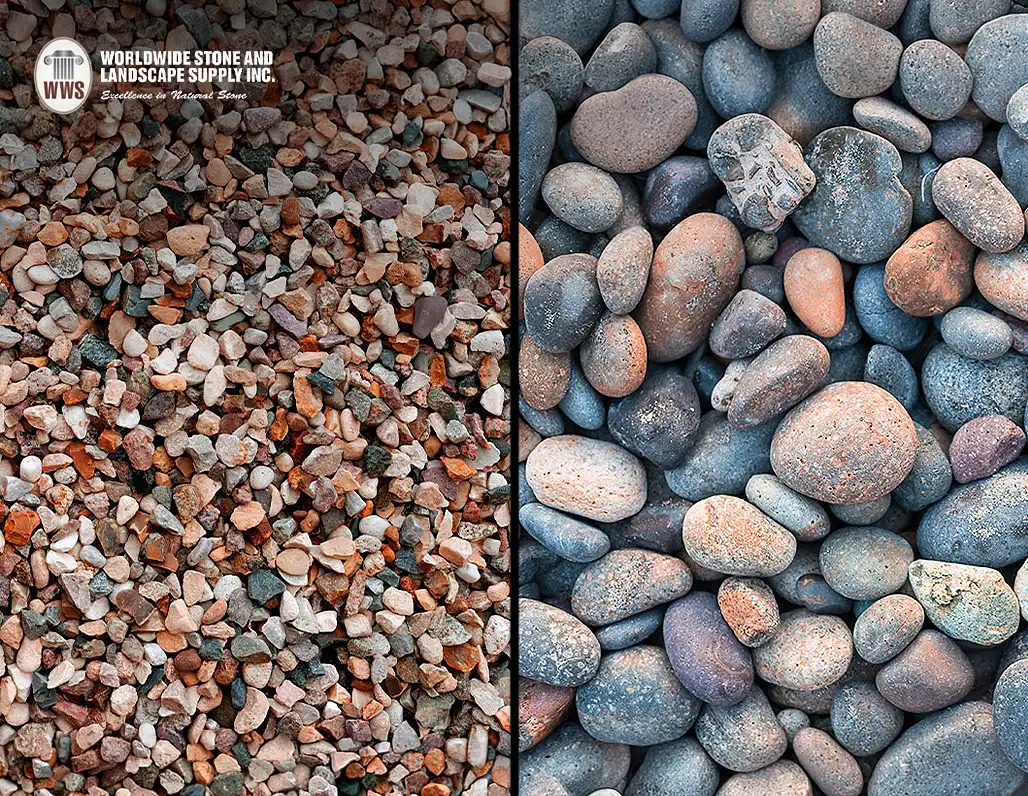
Pick up a river pebble in one hand and a piece of gravel in the other. The pebble is smooth, rounded and pleasant to hold. The gravel is rough and angular, with sharp little edges. That difference in shape decides almost everything about how each stone behaves in your yard. Both are low-maintenance ways to finish a garden, cover bare ground and help water drain away. But pebbles are made to be admired, while gravel is made to carry your weight. If you are still exploring options, our guide to different types of landscaping stones gives the wider picture.
What Are River Pebbles?
River pebbles are naturally rounded stones, smoothed over long periods by moving water. They come in a range of sizes, from small pea-sized stones to large cobbles, and in colours from soft beige and grey to deep black. Their smooth surface reflects light gently and gives a garden a calm, polished feel.
Decorative river rock is mainly an aesthetic material. It shines in beds, borders and water-themed features, where it is seen more than it is walked on. Browse our natural river pebbles in Ontario to see the sizes and colours available.
What Is Landscaping Gravel?
Landscaping gravel is crushed or naturally broken stone with angular edges. Because the pieces are irregular, they interlock when compacted, forming a firm surface that stays put underfoot. Landscaping gravel types range from fine crushed stone that packs almost solid to larger decorative chips with a looser, more textured look.
Gravel is the practical choice. It works for paths, side yards, patio surrounds and drainage bases, anywhere people walk or water needs to move. Explore our natural gravel for landscaping for colours and grades.
River Pebbles vs Gravel: A Side-by-Side Comparison
Factor | River Pebbles | Gravel |
Shape | Smooth, rounded | Angular, irregular |
Look | Polished, soft, decorative | Textured, natural, practical |
Walkability | Rolls underfoot; uncomfortable for paths | Firm and stable once compacted |
Compaction | Does not lock together | Interlocks into a solid surface |
Drainage | Excellent; large gaps between stones | Good; finer grades drain more slowly |
Best use | Beds, dry creeks, water features, accents | Paths, side yards, patio surrounds, bases |
Best Uses for River Pebbles
Pebbles earn their place where appearance and water movement matter more than foot traffic.
Garden Beds and Borders
Pebbles for garden beds are a long-lasting alternative to mulch. They do not break down, blow away or need topping up every spring the way bark does. A layer of pebbles around shrubs, ornamental grasses and perennials frames the plants and keeps soil from splashing onto patios in heavy rain. Light pebbles brighten shady beds, while dark pebbles make green foliage stand out.
Dry Creek Beds and Drainage Areas
A dry creek bed is one of the most effective ways to use river rock. It channels runoff from downspouts or low spots through the garden, and the rounded stones look natural even when no water is flowing. Mixing pebble sizes, with larger stones along the banks, makes the creek look like it formed on its own.
Around Water Features and Fire Pits
Pebbles suit ponds, fountains and bubblers, where their water-worn shape feels at home. They also make an attractive surround for a natural stone fire pit, but keep them outside the burn area, since trapped moisture can crack them when heated. Our natural stone fire pit guide explains why.
Also Read: Why Natural Stone is the Perfect Choice for Modern Landscaping
Best Uses for Gravel
Gravel belongs wherever people walk, sit or park.
Pathways and Walkways
Gravel for walkways is affordable, permeable and quick to install. Compacted in layers, it forms a firm path that drains after rain and suits informal gardens, cottage settings and routes between beds. Finer crushed grades give the most stable footing.
Side Yards and Patio Surrounds
Narrow side yards are often too shady for grass and too busy for planting. Gravel turns them into tidy, usable space for bins, bikes and access. Around patios, it creates a neat transition to the lawn and catches runoff from the paved surface.
Drainage and Weed Control: Fabric and Edging
Both stones need the same two supporting elements. First, landscape fabric. Laid over prepared soil, it lets water through while slowing weeds and stopping stone from sinking into the dirt below. Overlap the seams and pin them down so the fabric stays in place.
Second, edging. Without a firm border, pebbles and gravel slowly migrate into lawns and onto patios. Stone edge pavers hold loose stone in place and give each area a crisp outline. Our guide to edge pavers and stone edging covers the options in detail.
Also Read: Concrete vs. Natural Stone Pavers: The 30-Year Cost of Ownership
How Much Stone Do You Need?
How much river rock do I need? Start with volume: length × width × depth, all in the same unit.
Working example: a garden bed 4 m long and 1.5 m wide, filled 5 cm (0.05 m) deep.
4 × 1.5 × 0.05 = 0.3 cubic metres of stone.
In feet: a bed 12 ft × 5 ft at 2 inches (0.167 ft) deep.
12 × 5 × 0.167 = 10 cubic feet, or about 0.37 cubic yards (27 cubic feet per cubic yard).
Decorative pebble beds are often laid around 5 to 7.5 cm (2 to 3 inches) deep. Paths usually need a deeper, compacted gravel build-up. Stone is often sold by weight or by bag, and weight per cubic metre varies by stone, so bring your volume and let your supplier convert it. Order a little extra to cover settling and uneven ground.
Winter Care: Snow Clearing and Salt
Gravel paths can be cleared, but set your shovel or snow blower slightly raised so you skim the snow without scooping stone. Snow blowers can throw gravel a surprising distance, so raise the skid shoes before the first storm. Firm edging keeps the path’s shape when snow is pushed sideways.
Pebble beds rarely need clearing. Avoid piling salty snow onto them, since de-icing salt can leave white residue on stone and harm the plants beneath. In spring, rake gravel back into place, rinse salt residue from pebbles, and top up any thin patches.
Choosing Colours to Match Your Pavers
Loose stone looks best when it relates to the hard surfaces nearby. For a calm, unified look, pick pebbles or gravel in a tone close to your pavers. For contrast, go lighter or darker.
Dark stones such as Imperial Black pebbles look striking against light sandstone and modern grey pavers, and they make plant foliage pop. Warm beige pebbles suit buff and earth-toned paving and brighten shaded corners. Remember that darker stones absorb more sun, so lighter colours are kinder near seating and play areas.
Order River Pebbles and Gravel From Worldwide Stone
Pebbles for beauty, gravel for footing: most yards benefit from both. Compare our natural river pebbles in Ontario and natural gravel for landscaping at our Caledon yard. Still deciding on other materials? See our 15 best stones for landscaping.
Frequently Asked Questions
Which is better for a walkway, pebbles or gravel?
Gravel. Its angular pieces lock together into a firm surface, while round pebbles roll underfoot and make walking awkward, especially for strollers and wheelbarrows.
Are river pebbles good for drainage?
Yes. The gaps between rounded stones let water move through quickly, which makes pebbles a natural fit for dry creek beds and downspout areas.
Do I need landscape fabric under pebbles or gravel?
It is recommended. Fabric reduces weeds and stops the stone from sinking into the soil, so your layer stays thick and clean for longer.
How deep should river pebbles be in a garden bed?
Around 5 to 7.5 cm (2 to 3 inches) is a common depth for decorative beds. Larger pebbles may need a slightly deeper layer to cover the fabric fully.
Can I clear snow from a gravel path?
Yes, but keep the shovel or blower slightly raised so you do not scoop up stone. Edging helps hold the gravel in place.
How do I work out how much stone to order?
Multiply length × width × depth to get the volume. Your supplier can convert that volume into the right weight or number of bags for your stone.
Do dark pebbles get hot in summer?
Darker stones absorb more sun than light ones. Choose lighter colours near seating, pools or play areas where bare feet and hands are common.