The most important stones in your patio are the ones nobody looks at. They sit around the outside, quietly holding everything in. When the edge is done well, the patio looks crisp and finished for years. When it is skipped or done cheaply, the outer pavers start creeping outward, joints open, weeds move in, and the border slowly turns ragged. So what makes a good edge, and which kind should you use? This guide walks through edge pavers, how they compare with curbs and plastic edging, and five ways to use stone edging around your home.
What Are Edge Pavers?
Edge pavers are stones laid along the outer boundary of a paved area. They do two jobs at once: they frame the surface visually, and they act as a paver edge restraint that holds the field stones in place. They are usually narrower and longer than the main pavers, so they run in a neat line around the perimeter. Because they are set more firmly than the field, they resist the sideways push that comes from foot traffic, vehicles and frost. Our edge pavers in Ontario come in a range of stones, colours and finishes to match or contrast with your patio.
Why Every Patio and Walkway Needs a Proper Edge
Pavers are not glued to each other. They stay put because they are locked between their neighbours, and the outermost row has nothing on one side. Without a restraint, every footstep, wheelbarrow and snow shovel nudges that row outward a little. Over a few seasons, those nudges add up.
A proper edge stops that creep. It keeps joint lines straight, keeps the bedding layer from washing out at the sides, and gives the patio a clean, deliberate outline. It also makes maintenance easier, since grass and mulch meet a firm line instead of a loose, uneven border.
Edge Pavers vs Curbs vs Plastic Edging
Factor | Stone Edge Pavers | Stone Curbs | Plastic Edging |
Look | Finished stone border, flush or near-flush | Raised, strong defined line | Hidden below the surface |
Height | Close to the patio surface | Taller, stands above one side | Below grade, not visible |
Strength | High when set on a solid haunch | Very high | Low to medium |
Lifespan | Long, ages with the stone | Long | Shorter; can crack or lift over time |
Best use | Patios, walkways, pool decks, beds | Driveways, level changes, separating surfaces | Budget installs where the edge is not seen |
Edge pavers suit most residential patios and paths. Natural stone curbs step in where you need height or heavier duty, such as driveway edges. For a deeper look at that choice, see granite curb vs concrete curb.
Also Read: 5 Design Ideas Using Natural Stone Pier Caps, Curbs & Coping for Modern Canadian Entrances
5 Ways to Use Natural Stone Edging
1. Framing a Patio Border
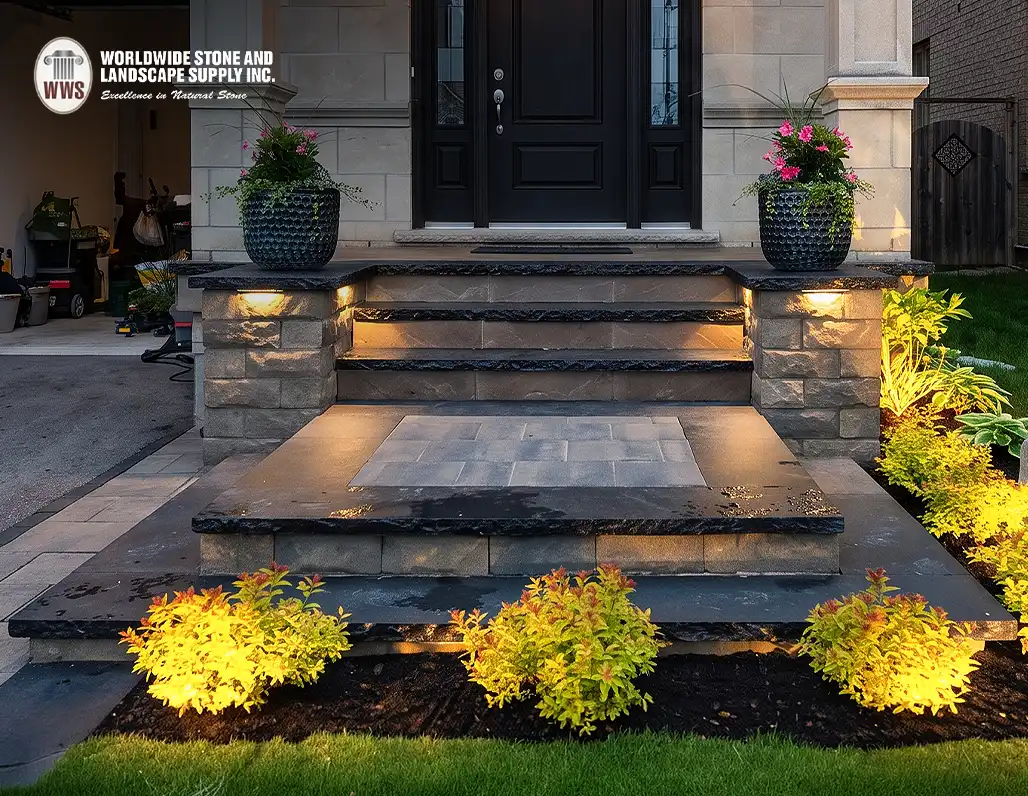
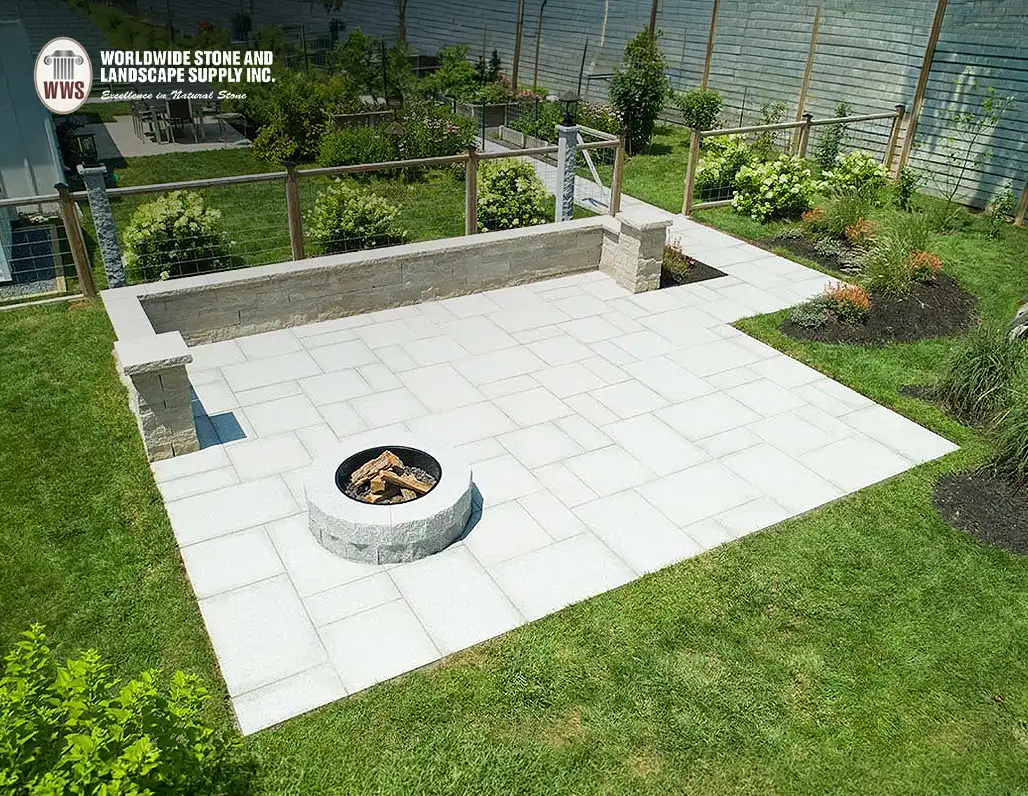
The classic use. A single row of edge pavers around natural stone pavers turns a field of stone into a defined outdoor room. A border also hides small cuts at the perimeter, since the field pavers meet a straight line instead of the lawn.
2. Lining Walkways and Driveways
Edging on both sides of a path keeps it straight and stops the outer stones from drifting into the garden. On driveways, a heavier edge or curb resists vehicle loads. Planning a new one? Read our 7 key factors for planning your driveway.
3. Defining Garden and Mulch Beds
Garden bed stone edging keeps mulch and soil where they belong and gives the lawn mower a clean line to follow.
4. Finishing the Area Around a Pool
Around a pool deck, edge pavers neatly close off the outer boundary while natural stone coping finishes the water’s edge.
5. Adding a Contrasting Colour Band
A darker or lighter border, or a band set within a large patio, adds pattern and helps break up wide areas of stone.
Also Read: 5 Common Mistakes to Avoid When Installing Natural Stone Pavers or Steps in Ontario
Matching vs Contrasting: Choosing Your Edge Colour
A matching edge, in the same stone as the patio, keeps the look calm and seamless. It suits smaller spaces, traditional homes, and designs where planting or furniture should be the focus. Changing only the finish, such as a smooth sawn edge around a textured field, adds subtle definition without a new colour.
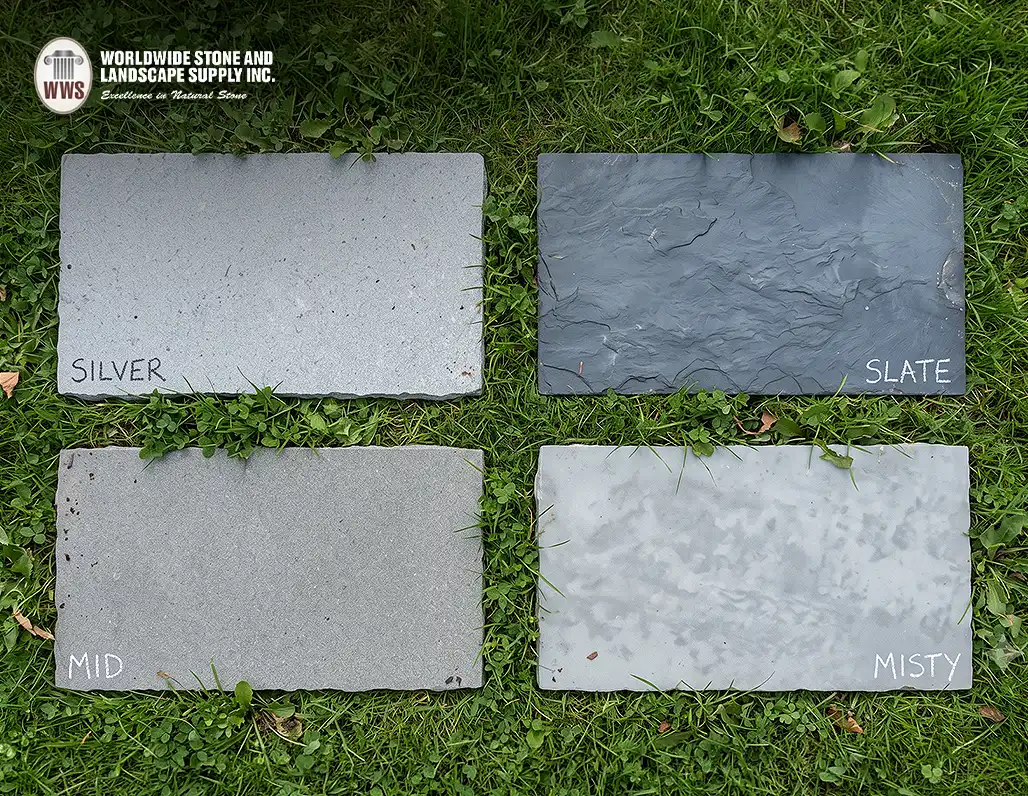
A contrasting edge makes the outline part of the design. One of the most popular patio border ideas is a dark border, such as Kota Black natural stone, around a lighter sandstone field. Dark edges also hide soil and grass stains well. To compare dark options side by side, see black natural stone compared.
Edge Paver Sizes and Finishes
Edge pavers are typically long and narrow so they can run in straight lines with few joints. Choose a thickness that matches or exceeds your field pavers so the edge is at least as strong as the surface it holds.
Finish affects both look and grip. Natural or split finishes feel rustic. Sawn and honed finishes give crisp, modern lines. Flamed and sandblasted finishes add texture and slip resistance, which matters around pools and on walkways. See the full range in our stone catalogue.
How Edge Pavers Are Installed
Edge pavers are installed in a sequence your contractor should follow closely:
Excavate wider. Dig the base out past the planned edge so the border sits on the same compacted foundation as the patio, not on loose soil.
Build and compact the base. A well-graded, compacted granular base under the edge is what stops it from sinking or tilting.
Set the edge on a firm bed. Many installers set edge pavers on a concrete bed and support the outside face with a concrete haunch for extra stability.
Lay to a string line. A tight line keeps the border straight and at the right height relative to the field.
Backfill and finish. Topsoil, mulch or gravel goes against the outside face once the haunch has set.
For pitfalls to avoid along the way, read our 5 mistakes to avoid when installing natural stone pavers.
Stopping Frost Heave and Shifting in Ontario
Frost heave happens when water in the soil freezes and expands, lifting whatever sits above it. Edges are especially exposed because they meet soft soil, lawn and garden beds that hold moisture.
The fix starts underground. Extend the compacted base beyond the edge so the border is not perched on native soil. Make sure the patio slopes so water drains off and away, not toward the edge. Avoid planting thirsty beds or directing downspouts right against the border. A firm haunch on the outside face then resists the sideways push of freezing soil. Done together, these steps keep the edge level through Ontario’s freeze-thaw cycles.
Keeping Your Stone Edging Looking Sharp
Stone edging needs very little care, but a few habits help. Trim grass back from the outside face so it does not creep over the stone. Keep mulch slightly below the top of the edge so it does not spill onto the patio. Top up joint sand where the edge meets the field, especially after the first winter. Each spring, walk the border and reset any piece that has lifted before neighbouring pavers follow. Avoid metal shovel blades and rock salt directly on the edge, and rinse off fertilizer, which can stain some stones.
Shop Edge Pavers at Worldwide Stone
The right edge makes the whole patio look finished. Compare our edge pavers in Ontario in matching and contrasting stones, then visit our Caledon stone yard to see them next to your chosen pavers.
Frequently Asked Questions
What is an edge paver?
An edge paver is a stone set along the outside of a paved area to frame it and hold the surface in place. It doubles as a visible border and a structural edge restraint.
Does a natural stone patio need edging?
Yes. Without an edge restraint, the outer pavers can slowly spread and shift, opening joints and letting the bedding wash out at the sides.
What is the difference between an edge paver and a curb?
Curbs are usually taller and separate levels or surfaces, such as a driveway and lawn. Edge pavers sit close to the patio surface as a finishing border.
Can I use a different colour for my patio border?
Yes. A darker border, such as Kota Black around a lighter sandstone, is a popular way to outline a patio and add contrast.
Are edge pavers set in concrete?
Many installers set them on a concrete bed or haunch for extra stability, especially on driveways and busy paths. Your contractor will advise for your site.
Can edging be added to an existing patio?
Often, yes, as long as there is room to dig a proper base along the edge. Loose outer pavers may need resetting first.
Can I use stone edging for garden beds?
Yes. Stone edging keeps mulch and soil in place, stops grass creeping into beds, and gives each bed a crisp, permanent outline.